Microsoft Withdraws from Planned UK Mega Datacentre Amid Power Grid Constraints
Microsoft has cancelled its agreement with Nscale for a major AI datacentre in Essex, dealing a blow to Britain's sovereign AI ambitions due to local power supply delays.
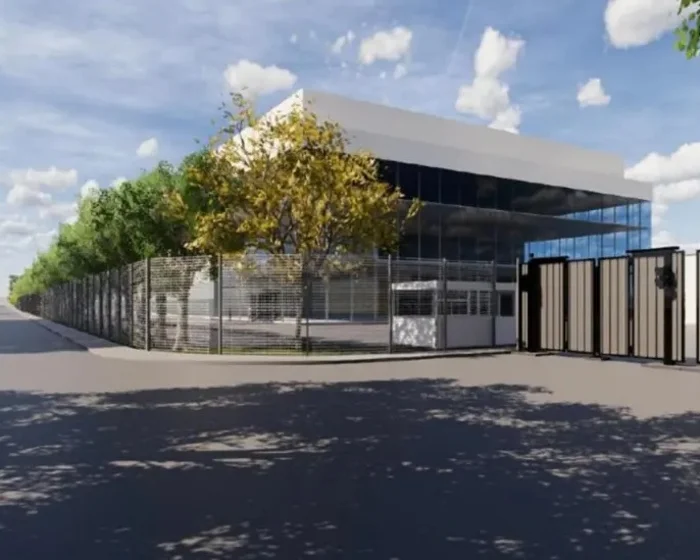
Microsoft has terminated its agreement to anchor a major artificial intelligence datacentre project in Essex, dealing a significant blow to the UK's sovereign infrastructure ambitions. The facility, developed by British firm Nscale and located in Loughton, was intended to serve as a flagship installation for the country's AI computing capacity. However, mounting concerns surrounding electricity supplies and grid connection timelines have prompted the technology giant to pull out of the project.
The development marks an abrupt shift for an initiative that had been prominently backed by the UK government. Announced during the rollout of the national AI strategy in 2025, Prime Minister Keir Starmer's administration hailed the planned Essex facility as the "largest UK sovereign AI datacentre," intended to open as soon as next year.
Grid constraints disrupt sovereign compute plans
The planned facility at Loughton faced growing scrutiny before Microsoft's decision. Doubts surfaced in March when reporting revealed the chosen site remained an active scaffolding yard rather than a construction-ready facility. Shortly thereafter, it emerged that severe power supply complications would impose substantial delays before the site could come online.
Nscale characterised the situation as an "unfortunate London-wide grid issue." Because datacentres function as the heavy-duty operational backbone for resource-intensive technologies like modern chatbots, access to massive and immediate electrical capacity is critical. The inability to secure timely power feeds has increasingly collided with the rapid development schedules demanded by major hyperscalers, leading Microsoft to abandon its commitments to the Essex location.
Repercussions for Nscale's market debut
The loss of Microsoft—which was not only the site's expected anchor tenant but also its sole publicly announced customer—creates serious commercial challenges for Nscale. Backed by hardware giants including Nvidia, Nscale has promoted itself as the primary provider of domestic, sovereign datacentre capacity in Britain. The company had been preparing to launch a public offering on Wall Street later this year, targeting a valuation of up to $35 billion (£26 billion).
Despite the setback in Essex, the partnership between the two companies has not entirely collapsed. Microsoft remains contracted for an alternative Nscale facility located in Norway. In response to the news, first reported by the Telegraph, an Nscale spokesperson stressed that the company is exploring alternate power avenues and replacement sites across the UK:
"We remain committed to both the Loughton project and the UK and we are exploring alternative power sources for the site, in addition to other expansion sites in the UK. Our relationship with Microsoft remains strong and long-term, and this unfortunate London-wide grid issue has no impact on our other contracts."
What it means for developers
For software engineers and technology teams, the stalling of the Loughton site highlights the physical vulnerabilities underlying modern AI software. Although model architectures and developer tools continue to evolve rapidly, the hardware and electrical infrastructure required to run compute clusters face hard geographic and logistical bottlenecks.
Key takeaways for developers include:
- Infrastructure deployment timelines remain unpredictable: Physical constraints like grid capacity and power allocation directly dictate when local sovereign compute actually becomes available. Projects announced on aggressive multi-year roadmaps can face multi-year delays or sudden cancellations.
- Reliance on multi-region compute: Developers hoping to keep operational data and model inference entirely inside UK borders must continue dealing with limited sovereign capacity, making multi-region cloud deployment necessary for now.
- The necessity of decoupled infrastructure: Tying an engineering stack to specific datacentres or single-provider roadmaps exposes teams to infrastructure risk. To maintain reliability, developers frequently turn to aggregated API platforms. Teams can try top AI models cheaply through one API at Apixo, avoiding individual datacentre dependencies by abstracting model consumption through a single access layer.
As the UK looks for solutions to power its digital economy, the collapse of the Loughton agreement illustrates that energy infrastructure, rather than software innovation, represents the most urgent bottleneck facing AI deployment.
Source: Microsoft drops huge AI datacentre project in Essex over power supply concerns — The Guardian AI. Written by the Apixo team from that report.
One key for Claude, GPT, GLM, DeepSeek and more. Pay per token with crypto.
Get your API key