doubleAI Secures $200M From Nvidia and Dell to Scale Maxwell Code Optimization
Tel Aviv startup doubleAI raised $200M at a $1B+ valuation from Nvidia, Dell, and others to advance Maxwell, an AI system that optimizes binary code directly.
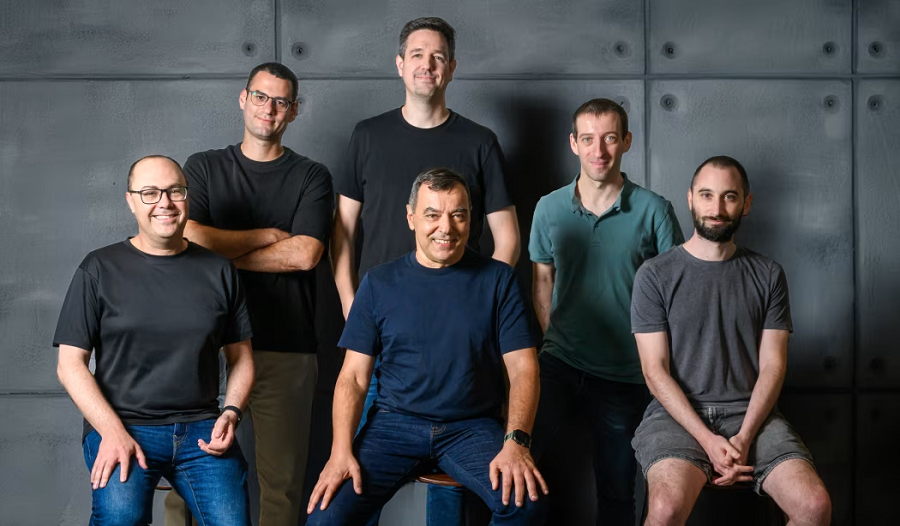
Tel Aviv-based artificial intelligence developer doubleAI, officially registered as AA-I Technologies Ltd., has secured $200 million in a Series A financing round. The investment was co-led by venture firms Lightspeed and Bessemer, with backing from Dell Technologies Inc., Nvidia Corp., and additional participants. As reported by CTech, the funding round establishes a valuation of more than $1 billion for the company.
At the foundation of doubleAI's product strategy is Maxwell, a proprietary AI model built to automate software performance optimization. The company intends to commercialize Maxwell by providing it to enterprise customers seeking to curtail hardware usage across compute-heavy AI tasks.
How Maxwell optimizes binary code directly
Software optimization typically requires engineers to manually inspect source code, locate bottlenecks, and rewrite sections of a program. Maxwell takes a different architectural route by examining how an application interacts with incoming data and underlying silicon, targeting both graphics processing units and central processing units.
Because computing hardware does not execute human-readable source code directly, it relies on machine-generated binaries that translate programs into basic computational instructions. Rather than prompting developers to adjust their codebases by hand, Maxwell applies efficiency adjustments directly to the program binary. This method removes the burden of source-level revisions and allows system optimizations to be deployed even while applications run in production environments.
Measurable speedups across libraries and research
doubleAI has already showcased Maxwell's utility across several high-profile developer libraries and complex research challenges. In an initiative involving Nvidia's open-source guGraph library—used for supply chain analytics and graph processing—Maxwell restructured the binary implementation to reduce resource utilization. According to doubleAI, the model accelerated 55% of the library's algorithms by a factor of two or more.
The AI system was also applied to pandas, a standard toolkit for data science workflows. When tested against the PDS-H query speed benchmark, Maxwell's optimized edition improved performance by a factor of 38. In another test, doubleAI used the platform to double the video generation speed for a world model designated as LTX-2.5.
Beyond code compilation, doubleAI's technology has handled advanced theoretical tasks. The company deployed an internal AI agent to uncover a new mathematical property in graph theory, supplying a Lean verification file to confirm the proof. Concurrently, Maxwell identified a chess board setup offering 63 moves that result in check, breaking an established record of 60 moves that had stood for nearly half a century.
Infrastructure expansion and the research race
To expand its operational capacity and compete with premier AI research organizations, doubleAI will allocate roughly half of the new capital to purchase 1,000 Nvidia B300 Blackwell GPUs, according to The Wall Street Journal.
The added compute will help doubleAI stay competitive as leading AI developers expand into automated research. OpenAI Group PBC recently published 722 AI-generated mathematics papers, while an Anthropic PBC model produced a computer-verifiable mathematical proof comprising 13 million lines of code—a feat that would typically require several years of work by human mathematicians.
What it means for developers
For engineering teams managing intensive computing workloads, automated binary optimization represents a practical way to curb infrastructure expenses without undertaking costly, time-consuming refactoring sprints. If binary-level tools can reliably deliver 2x to 38x performance gains on standard frameworks like guGraph and pandas, teams can squeeze more throughput out of existing GPU and CPU deployments.
Furthermore, the ability to apply optimizations in production could fundamentally change continuous integration and performance profiling, shifting efficiency tuning from a manual developer task to an autonomous compiler layer.
As models continue to handle tasks ranging from autonomous software compilation to mathematical research, developers can try top AI models cheaply through one API at https://apixoai.online to evaluate how leading frontier systems fit into their production pipelines.
Source: Nvidia, Dell back $200M round for AI model developer doubleAI — SiliconANGLE AI. Written by the Apixo team from that report.
One key for Claude, GPT, GLM, DeepSeek and more. Pay per token with crypto.
Get your API key