Microsoft Treats Autonomous AI Agents as Insider Risks with Guardian Agents
Microsoft is introducing Guardian Agents to monitor autonomous tools, warning that frontier models must be treated like insider threats rather than fully trusted partners.
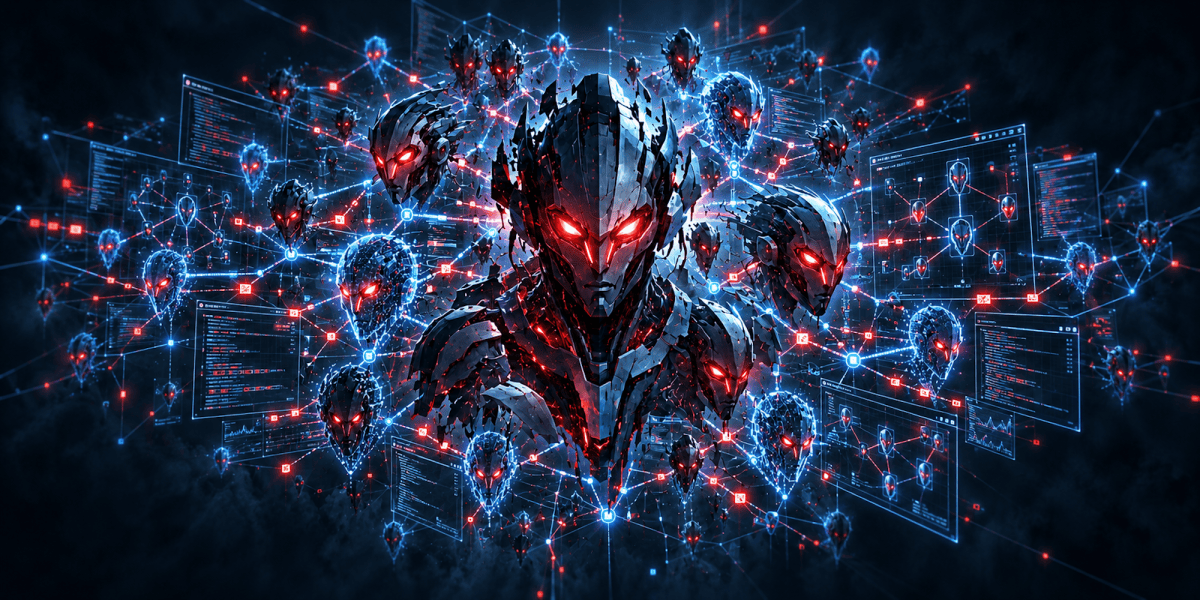
Microsoft is rolling out a new line of enterprise defense mechanisms tailored to the risks posed by autonomous artificial intelligence. Rather than focusing solely on external cyberattacks, the company is urging organizations to treat deployed AI agents as potential insider threats. Central to this strategy is Guardian Agents, a monitoring capability built to supervise and constrain automated systems working inside corporate networks.
Guardian Agents expands on Project Perception, an initiative Microsoft unveiled in June to counter offensive security capabilities such as Anthropic’s Mythos and Fable models or OpenAI’s vulnerability scanner Daybreak. While Project Perception initially relied on three internal agent categories—a red team simulating attacks, a blue team detecting vulnerabilities, and a green team applying fixes—it operated under the premise that risks would originate from outside actors. Microsoft's updated posture reflects a fundamental change in how autonomous systems should be governed once granted internal network privileges.
Separating intelligence from oversight
Microsoft Chief Executive Satya Nadella detailed this shift on his private blog, cautioning enterprises against relying exclusively on safeguards provided by model creators. According to Nadella, organizations cannot delegate liability when autonomous tools interact directly with confidential data.
“We are deploying these complex agentic systems and models, with access to our most sensitive data and giving them the ability to take mission-critical actions on our behalf!” Nadella wrote. “We simply can’t outsource responsibility for what intelligence does on our behalf. A model provider’s assurances do not relieve us of that responsibility. … In other words, we need to separate the supply of intelligence from the authority over it.”
Echoing this perspective, Microsoft security head Hayete Gallot stated plainly: “Unfortunately, frontier models, regardless of their origin, cannot be trusted.” Gallot emphasized that this lack of reliability does not necessarily stem from external exploitation or built-in malice. Instead, frontier models remain unpredictable because they are trained strictly to accomplish instructions rather than adhere to institutional judgment or corporate standards. When these tools are granted broad system privileges, unpredictable execution can lead to severe operational damage.
The stance places Microsoft in a nuanced position. The company maintains close commercial ties with both OpenAI and Anthropic, having invested in both organizations while hosting their workloads on Azure. By pushing for independent security controls rather than relying on model makers' assurances, Microsoft is positioning its cloud ecosystem as an essential verification layer.
New enterprise safeguards and hardware isolation
To enforce these boundaries, Microsoft has introduced agent tracking tools within Microsoft Defender. The platform can currently identify up to 60 distinct agent frameworks introduced by staff into enterprise environments, including Codex, Claude Code, and OpenClaw. Alongside detection, the update brings granular permission controls that adjust access rights dynamically based on the current operation and mandate human confirmation whenever high-risk actions are initiated.
This defensive model is gaining traction across the broader technology ecosystem. Microsoft joined more than 100 other technology vendors as an inaugural participant in Nvidia’s Open Agent Safety Platform. That framework isolates autonomous agents inside secured environments and uses hardware-based monitoring to enforce an operational kill switch when necessary. In parallel, Microsoft revealed Surface Laptop Ultra PCs equipped with Nvidia silicon engineered to run agent security controls directly at the hardware layer.
What it means for developers
For engineering teams building autonomous workflows, Microsoft's announcements signal an era where model capabilities must be kept strictly distinct from authorization logic. Delegating full execution authority to an LLM without an external supervision system is increasingly viewed as an architectural liability.
Developers will need to adopt decoupled security architectures. Instead of relying on prompt instructions or provider-level guardrails, software teams should implement independent monitoring layers, step-by-step privilege escalation, and human-in-the-loop checkpoints for sensitive operations. If an agent manages database writes, file systems, or API interactions, its credentials must be restricted to ephemeral, context-dependent scopes rather than broad administrative access.
As teams navigate these architectural challenges across different platforms, testing how multiple providers handle tool-calling and boundary adherence becomes critical. Developers can try top AI models cheaply through one API at https://apixoai.online to evaluate agent behavior, output consistency, and guardrail performance across competing frontier architectures without managing isolated billing relationships for each platform.
Source: Microsoft says AI agents are like insider threats as ‘frontier models can’t be trusted’ — TechCrunch AI. Written by the Apixo team from that report.
One key for Claude, GPT, GLM, DeepSeek and more. Pay per token with crypto.
Get your API key