Elvis Presley Estate Sues Anthropic Over Alleged AI Training on 274 Songs
Authentic Brands Group has filed a lawsuit against Anthropic, alleging the AI developer used 274 Elvis Presley songs without permission to train its Claude model and seeking $41 million.
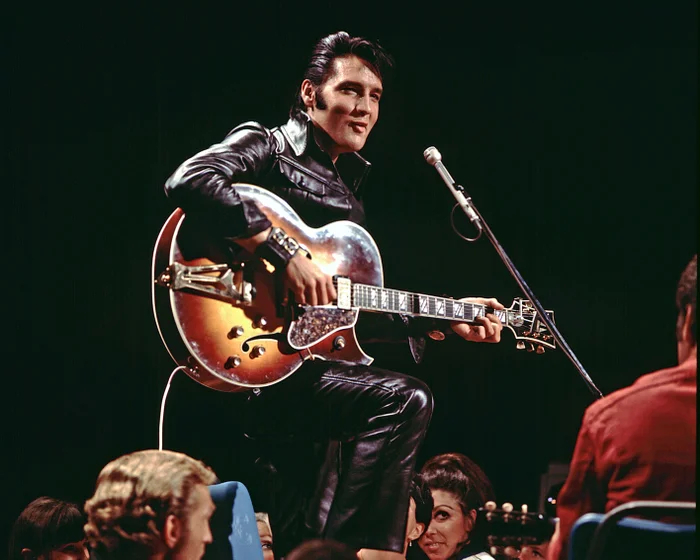
Anthropic is facing a new legal challenge after the intellectual property holders of Elvis Presley's music catalogue filed a copyright infringement lawsuit against the AI company. Authentic Brands Group, which controls the licensing rights to the late singer’s recordings, musical catalog, and likeness, alleges that the startup used 274 of Presley’s tracks to train its generative models without securing legal authorization.
The complaint, which was first reported by Billboard and submitted on Friday, seeks statutory damages of $150,000 per work, amounting to roughly $41 million (approximately £31 million). This legal action marks a notable development in ongoing AI litigation, representing one of the earliest prominent lawsuits initiated directly by an artist's estate rather than collective industry trade groups or record labels.
The Legal Claims Against Claude and Anthropic
At the center of the dispute are specific classic tracks recorded by Presley, such as "Can’t Help Falling in Love," "All Shook Up," and "A Little Less Conversation." According to the complaint, Anthropic relied on these copyrighted recordings without authorization while assembling the datasets used to build its flagship model, Claude.
In the legal filing, lead attorney Richard Busch argued that the AI vendor established its core commercial enterprise through systematic infringement. Busch wrote that the plaintiffs are seeking to "enforce these exclusive rights against the defendant that has built its entire business model based on copyright infringement at a scale never seen before."
The estate further contends that Anthropic’s model has generated protected creative works across a wide scale. The filing claims that "from its inception, Anthropic’s AI model, ‘Claude,’ has created infringing output of copyrighted material of virtually every song from every catalog available on the internet."
Additionally, the lawsuit scrutinizes Anthropic’s subsequent attempts to curtail unauthorized outputs through safety filters. The complaint argues that the company’s internal controls failed to address the underlying issue, stating: "Even Anthropic’s institution of guardrails (albeit ineffectively) to purportedly limit outputs which infringe upon music copyrights, after being caught, along with its knowledge that its guardrails were ineffective to stop creating outputs which infringed music copyrights, demonstrates that Anthropic knowingly engaged and continues to willfully engage in copyright infringement of others’ musical works."
Growing Tensions Between AI Developers and the Music Industry
While major recording labels—including Sony, Universal, and Warner Records—alongside the Recording Industry Association of America (RIAA) have previously brought copyright actions against AI firms, the Presley estate's action targets how foundation models ingest and replicate existing creative catalogues. AI music platforms function by processing large volumes of recorded tracks to learn structural and acoustic characteristics, which then enables users to generate new music from text or voice prompts.
Across the creative sector, recording artists and songwriters have voiced persistent worries regarding the uncredited use of their voices, lyrical structures, and compositions within training datasets. These concerns center on both unapproved training and the proliferation of AI-generated "slop" that threatens to compete with human creators, alongside automated accounts impersonating living musicians on streaming platforms. Illustrating the scale of synthetic audio distribution, Spotify recently revealed that it had removed approximately 50 million tracks classified as AI slop from user recommendations over the preceding twelve months.
What it means for developers
For software engineers and technical teams building on top of large language models, this lawsuit highlights mounting scrutiny surrounding training data provenance and output generation risks.
First, the lawsuit directly targets safety guardrails, claiming that Anthropic's post-training guardrails did not adequately stop the reproduction of copyrighted musical lyrics or works. Developers creating customer-facing generative applications should realize that upstream guardrails may not fully eliminate copyright exposure, making it prudent to apply application-level filters whenever processing requests related to copyrighted text, song lyrics, or branded properties.
Second, legal precedents established in cases brought by rights holders like Authentic Brands Group could alter model availability, licensing fees, or training practices across the industry. Rather than locking an architecture into a single provider that might face sudden regulatory or court-ordered modifications, teams frequently adopt multi-model strategies. Developers looking to benchmark and integrate different providers can test top AI models cheaply through one API at https://apixoai.online, allowing applications to remain flexible regardless of legal developments affecting individual model vendors.
Ultimately, as rights holders pursue substantial statutory penalties for ingested data, developers must remain conscious of how commercial models handle intellectual property and structure their own software pipelines with transparency and risk management in mind.
Source: Anthropic sued for allegedly using 274 Elvis Presley songs to train AI models — The Guardian AI. Written by the Apixo team from that report.
One key for Claude, GPT, GLM, DeepSeek and more. Pay per token with crypto.
Get your API key