Firmus Technologies Faces Valuation Reality Check Ahead of Planned ASX IPO
AI datacentre startup Firmus Technologies is reportedly slashing its $44 billion valuation or shelving its ASX listing entirely as investors raise concerns over unbuilt infrastructure.
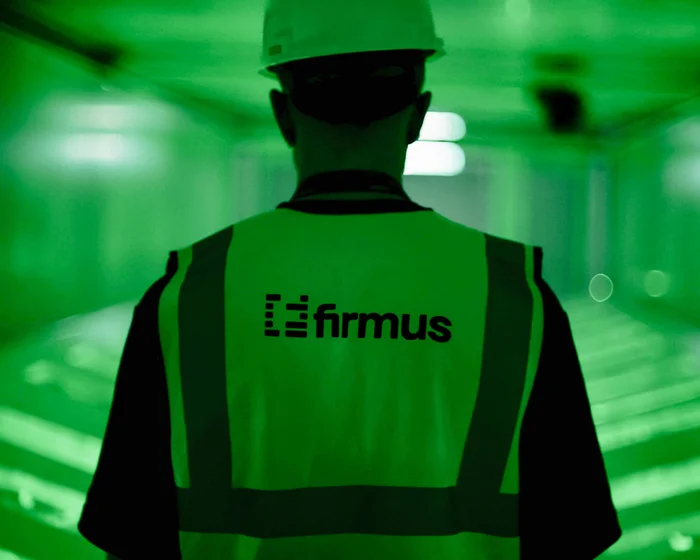
The Australian tech sector was anticipating its largest initial public offering in decades, but those plans are now facing severe turbulence. Firmus Technologies, an artificial intelligence datacentre startup, is reportedly slashing its ambitious $44 billion valuation or contemplating canceling its debut on the Australian Securities Exchange (ASX) entirely. This sudden shift comes as skeptical investors raise concerns over the company's financial health and the feasibility of its massive infrastructure pipeline. The company also abruptly canceled its scheduled appearance at a parliamentary inquiry into artificial intelligence amid urgent internal discussions to salvage the offering.
A Fanciful Valuation Under Scrutiny
Just over a year ago, Firmus was valued at $1.85 billion during a funding round supported by Nvidia and other prominent Wall Street players, including Blackstone, Jane Street, and Coatue. Successive capital raises pushed that valuation to $15 billion just two months ago, before peaking at an estimated $44 billion. However, that figure is now being rapidly unwound due to lukewarm investor response.
Critics point out that Firmus is still a startup losing hundreds of millions of dollars. An investment manager briefed on the float described the rising valuation as "fanciful," noting that the company's price tag kept climbing despite its mounting losses. The planned listing, scheduled for October 23, was set to offer shares at $11 each, making it the biggest Australian IPO since Telstra in 1997. That target is now highly unlikely to be met without a steep price reduction or a complete withdrawal of the listing.
The Gap Between Plans and Infrastructure
Firmus's core business model centers on building and operating liquid-cooled "AI factories" equipped with Nvidia graphics processing units (GPUs). While the company has secured contracts with major industry players like Meta, OpenAI, and Nvidia, its physical footprint remains small. Currently, Firmus operates only two minor sites, with seven contracted and four planned facilities still in the pipeline.
According to Armina Rosenberg, co-founder of Minotaur Capital, approximately 97% of Firmus's contracted revenue is tied to facilities that have not yet been built. Rosenberg emphasized that the company's valuation relies entirely on everything going perfectly regarding construction, financing, and contract renewals. To avoid local community resistance to datacentres in Australia and the United States, Firmus has focused its expansion on Asia. However, this strategy introduces other challenges, such as power limitations and extended construction timelines.
Morningstar analyst Lochlan Halloway noted that the market sentiment surrounding Firmus has entered a "euphoric" phase, referencing economist Charles P. Kindleberger's bubble framework. Halloway clarified that Firmus's business is not merely empty hype, but the primary risk is that investors are being asked to pay an unsustainably high price. If capital expenditure from tech giants like Google, Microsoft, and Meta slows down, third-party datacentre operators like Firmus could be the first to suffer.
What it means for developers
The volatility surrounding Firmus highlights the massive capital requirements and physical bottlenecks associated with hosting state-of-the-art AI models. Building the physical infrastructure to support high-density GPU clusters is a slow, capital-intensive process fraught with construction delays and power grid constraints. For software engineers and enterprises, this serves as a reminder of the stark division between physical infrastructure providers and the application layer.
While datacentre operators grapple with multi-billion-dollar financing hurdles and construction timelines, software developers can remain agile. Instead of worrying about GPU shortages or the financial stability of physical hosting providers, developers can try top AI models cheaply through one API at https://apixoai.online. This approach allows teams to build and scale applications using models from OpenAI, Google, and Meta without being exposed to the capital risks of the underlying hardware layer.
Ultimately, whether Firmus proceeds with its ASX listing at a reduced price or shelves it entirely, the demand for AI computation remains high. However, the financial markets are signaling that the era of unchecked valuation growth for infrastructure startups may be drawing to a close, forcing a healthier focus on execution and actual operational capacity.
Source: Datacentre company Firmus’s high flying valuation may be coming back down to earth ahead of expected ASX debut — The Guardian AI. Written by the Apixo team from that report.
One key for Claude, GPT, GLM, DeepSeek and more. Pay per token with crypto.
Get your API key