Google Introduces Autonomous Gemini Agents for Enterprise Environments
Google Cloud has revealed a new unified agentic architecture for Gemini, bringing task automation, third-party model support, and MCP integration to business users.
Google is transitioning its Gemini artificial intelligence platform into an autonomous system capable of executing full workflows on behalf of users. Announced during a Google Cloud event on Thursday, the new unified agent shifts Gemini away from purely conversational assistance and toward direct task execution through a consolidated workspace.
According to Google CEO Sundar Pichai, Gemini has surpassed 1 billion monthly active users, while nearly 90% of Fortune 100 enterprises currently utilize Gemini Enterprise. Google plans to roll out these agentic capabilities to commercial clients first, allowing the company to resolve critical challenges surrounding performance, enterprise security, and infrastructure scale before deploying them across consumer products.
Autonomous workflows and system integrations
Unlike traditional chatbots that rely on discrete prompts, the agent is engineered to receive broad targets rather than rigid step-by-step directions. Google Cloud CEO Thomas Kurian highlighted that the system can be assigned "objectives, not just instructions," granting it the autonomy to map out execution phases, apply custom skills, and tap directly into internal enterprise backends.
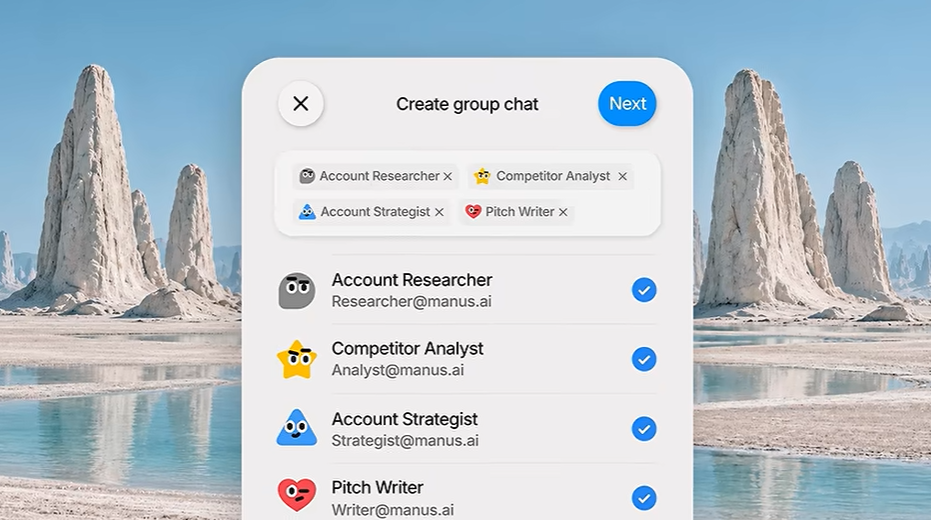
To facilitate collaboration, the system operates with its own Google Workspace account and assigned email address, essentially functioning alongside human team members. In this role, the agent maintains visibility into organizational charts, colleagues' time zones, calendar availability, and approval hierarchies. Coworkers can trigger the agent via email, chat mentions, file sharing, or direct messages. Every action the system takes is documented under an agent-specific audit log rather than an individual employee's name.
Monitoring happens through a dedicated "tasks inbox," where administrators and users can inspect Gemini's reasoning steps, review generated code, follow skill initialization, and watch tasks being distributed to subagents. The agent interacts with third-party tools such as Slack, Microsoft 365, Jira, Git, Confluence, Postgres, BigQuery, Databricks, and Snowflake. It also supports internal and external Model Context Protocol (MCP) servers, and operates across Windows, Mac, iOS, Android, and command-line environments.
Multi-model selection and spending controls
While Gemini defaults to selecting the most suitable model for a given request, administrators and users retain manual control over model selection. Notably, this framework accommodates external engines, starting with Anthropic's Claude suite, with future expansions planned for private and open-source models.
Early testing has included organizations such as Shopify, PayPal, and On, alongside an enterprise footprint that includes BNP Paribas, Bradesco, Merck, Orange Spain, Santee Cooper, SOMPO, Ulta Beauty, and Wesfarmers. To help corporate customers monitor operational expenses, Google introduced budget management tools featuring real-time spending limits, multi-model orchestration, and automated routing.
What it means for developers
For engineering teams, Google's architectural update highlights the rapid shift from isolated chat completions to integrated agentic orchestration. The inclusion of the Model Context Protocol (MCP) offers a standardized foundation for connecting custom developer tools, internal databases, and code repositories directly to autonomous agents without writing bespoke middleware for each interface.
Furthermore, Google's decision to support non-Google models—such as Anthropic's Claude—reinforces a broader industry trend toward multi-model architectures. Rather than relying on a single vendor's ecosystem, modern applications increasingly combine diverse models tailored to specialized tasks like reasoning, code generation, or cost-efficient routine lookups. Developers building and evaluating multi-model workflows can try top AI models cheaply through one API at https://apixoai.online to benchmark latency, outputs, and unit economics across different model families.
With command-line access and deep Git integration, developers can also incorporate Gemini agents directly into CI/CD pipelines, repository maintenance, and routine development operations, establishing agentic systems as permanent infrastructure rather than standalone chat interfaces.
Source: Google brings agentic AI to Gemini, starting with businesses — TechCrunch AI. Written by the Apixo team from that report.
One key for Claude, GPT, GLM, DeepSeek and more. Pay per token with crypto.
Get your API key