Google Play Introduces Private Deployment for Personal AI-Built Android Apps
Google Play now allows users to deploy private, AI-built Android applications directly to their phones without public store listings, starting with Google AI Studio.
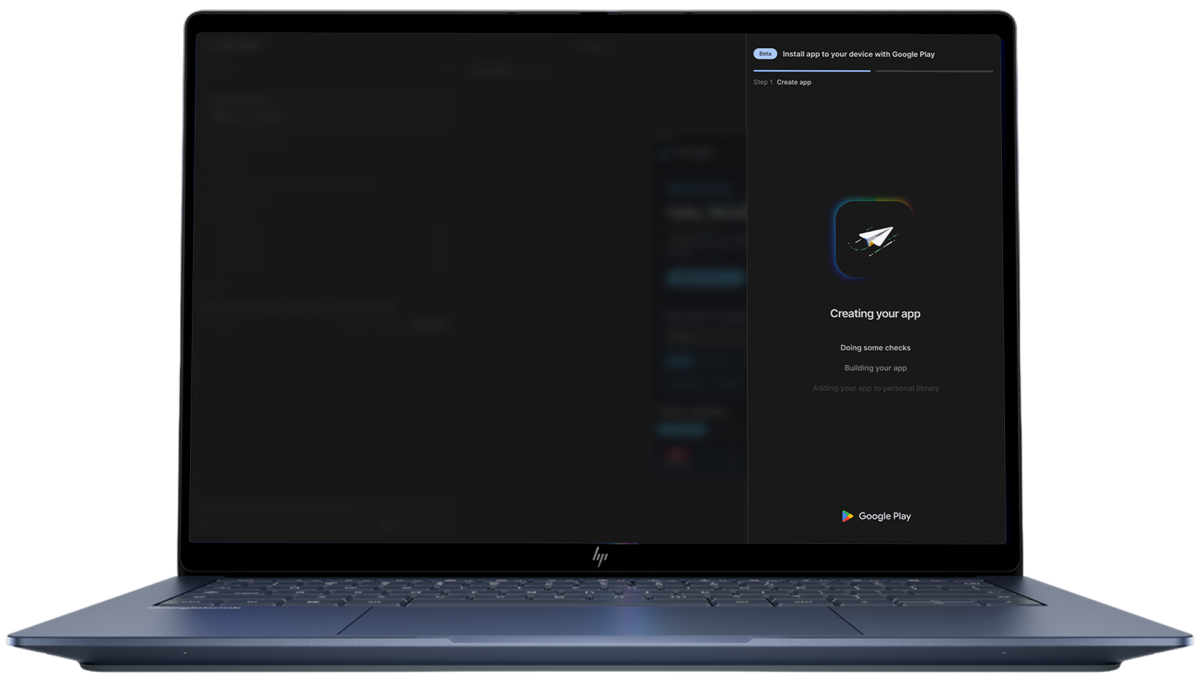
Android users will now be able to run personal, AI-generated applications directly on their mobile devices without making them available to the general public. Google announced an update to Google Play that lets individuals launch custom software created through Google AI Studio straight to their smartphones using their regular Google account, bypassing the public storefront entirely.
Historically, running an application natively on Android required submitting it to Google Play, exposing the software to the platform's roughly 3 billion users. Due to that barrier, many creators engaging in "vibe coding"—building software quickly using AI prompts—opted to create web applications rather than native Android builds. Under the new system, personal apps remain private, invisible in search results and store catalog pages, and accessible solely to the creator who deployed them.
Private deployment from Google AI Studio
The initiative begins in the United States for users aged 18 and older. While these creations will not be public, Google confirmed they must still comply with existing Google Play policies.
"That’s why the future of apps on Google Play is personal, secure, and built by everyone — and it’s why Play is leading the charge and moving from ‘there’s an app for that’ to ‘there’s an app for me,’" said Sam Bright, Google's VP & GM for Google Play and Developer Ecosystem. Bright added that the platform has evolved well beyond its original purpose of connecting consumers with third-party software.
Google plans to expand the capability over the coming months by allowing creators to share their builds with a restricted group of trusted friends and family members. This functionality is intended for localized use cases, such as an application organized for a neighborhood sports league. If a personal project gains broader traction, Google noted that developers will have a path to transition the software into a fully public Google Play listing after passing standard trust and safety evaluations.
Broad AI and discovery updates across Google Play
Alongside the private deployment feature, Google unveiled several other AI-oriented tools aimed at app discovery and engagement. The company introduced Game Finder, an AI-powered recommendation system initially available in English to U.S. users, which draws on behavior patterns from Google Play’s 1.2 billion gaming users to suggest relevant titles.
Other platform additions include user-curated game collections, a Community Posts section for questions, and 48-hour competitive gaming challenges called Sprints. The platform's native AI assistant, Ask Play, is also receiving an upgrade to compare similar apps side-by-side, while Gemini conversations will feature deeper integration with Play Store listings. Additionally, Google launched an age-range feature that lets parents share a child's general age bracket with app creators without disclosing an exact date of birth.
What it means for developers
This update alters the friction point between rapid prototyping and mobile deployment. By enabling direct-to-device installation through Google Play infrastructure, creators no longer have to navigate formal store distribution, complex signing ceremonies, or public review cycles just to test a tailored tool on their own hardware.
For developers exploring vibe-coding workflows, the shift allows native experimentation for niche, personal utilities that previously were not worth the overhead of a full Play Store release. As building software moves closer to natural language prompting, integrating different LLMs into the development process becomes increasingly important. Developers can try top AI models cheaply through one API at https://apixoai.online to power automated coding assistants, compare outputs from models like Gemini and Claude, and prototype tools before deploying them.
Furthermore, Google’s planned bridge from personal apps to trusted-circle sharing—and eventually to public store listings—establishes a gradual pipeline for software validation. Instead of committing to public maintenance from day one, developers can iterate with small test groups before deciding whether to take an application through standard trust and safety reviews for global release.
Source: Google Play now supports private, vibe-coded apps built just for you — TechCrunch AI. Written by the Apixo team from that report.
One key for Claude, GPT, GLM, DeepSeek and more. Pay per token with crypto.
Get your API key