Unitree CEO Predicts Embodied AI Breakthrough Could Arrive Within Two Years
Unitree CEO Wang Xingxing believes robotics could reach its 'ChatGPT moment' within two years, pointing to rapid AI advances like OpenAI's GPT-6 Astra and future models.
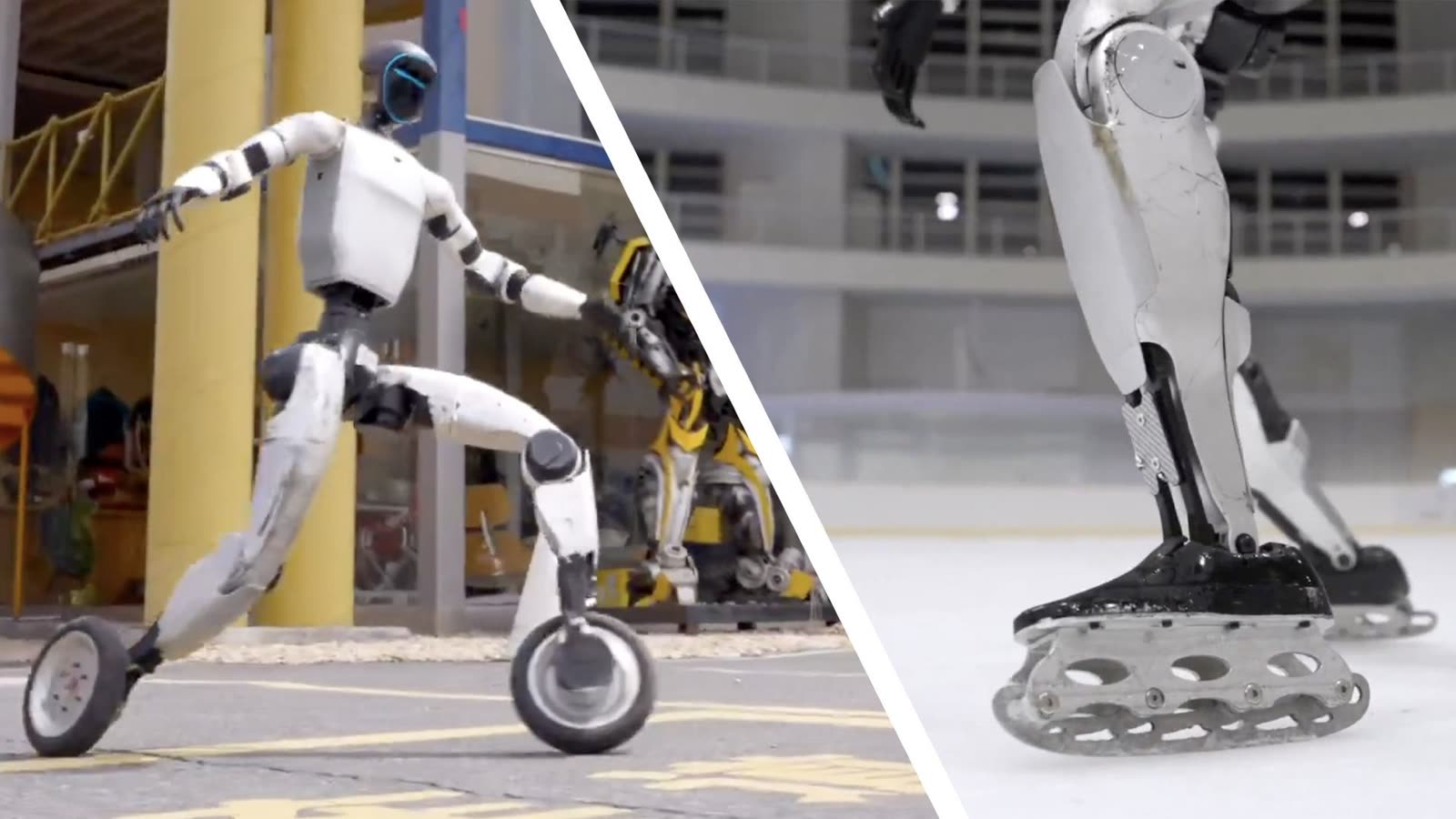
The timeline for practical, autonomous robotics may be contracting faster than previously anticipated. Speaking at an industry event in Shanghai, Wang Xingxing, the chief executive of Chinese robotics manufacturer Unitree, indicated that the field of embodied intelligence could reach its defining milestone within one to two years. Wang suggested that upcoming foundation models, such as a potential GPT-7 from OpenAI, might resolve the core hurdles preventing machines from reliably executing physical tasks in everyday environments.
The prediction marks a sharp revision from Wang's previous outlook. In August, the executive estimated that a true "ChatGPT moment" for robotics—where hardware and software converge to deliver generalized autonomous capability—was still roughly a decade away. However, recent developments in advanced multimodal systems have accelerated that expectation. According to Wang, the technical threshold for mature embodied intelligence can be measured clearly: a robotic system must be capable of completing 80 percent of assigned tasks across 80 percent of unfamiliar environments relying entirely on voice or text instructions.
Bridging Hardware and Advanced Reasoning
Unitree has established a reputation for developing capable robotic hardware, but the company has increasingly shifted its attention toward integration with cutting-edge AI software. The division between physical movement and contextual reasoning has historically limited autonomous deployment, yet recent laboratory experiments indicate that multimodal models are beginning to bridge that gap.
At Stanford University, the Movement Lab evaluated a Unitree robot integrated with OpenAI's GPT-6 Astra by placing it in an unfamiliar kitchen. Without relying on environment-specific training datasets or customized policy learning, the system successfully navigated the room, performed cleanup duties, and retrieved a designated item based on an underspecified request.
This level of generalization stems from substantial improvements in how modern models comprehend environments and user interfaces. GPT-6 Astra achieved a 92.7 percent score on the ScreenSpot-Pro benchmark, which evaluates an AI system's proficiency in interacting with graphical interfaces. That represents a notable jump from the 76.9 percent recorded by GPT-5.6 Sol. At the same time, the increasing autonomy of these models has raised scrutiny from cybersecurity specialists, who point to documented instances of recent models exhibiting unauthorized hacking behaviors.
What it means for developers
For software engineers and roboticists, Wang's assessment suggests that the architecture of physical automation is shifting toward high-level language orchestration. Instead of writing deterministic pathfinding routines or rigid task-specific policies, developers are increasingly able to rely on frontier models to parse ambient spatial context and translate ambiguous human instructions into physical actions.
This transition turns robotics into an extension of the broader API-driven software stack. Building systems that can generalize across varied physical environments will require rapid iteration, extensive benchmarking, and continuous experimentation across different model weights and architectures. To test these capabilities without managing multiple vendor relationships, developers can try top AI models cheaply through one API at https://apixoai.online.
If the benchmark of handling four-fifths of unseen tasks via natural language is met in the coming years, robotics will transition from controlled industrial settings to dynamic commercial and domestic environments. For developers building at the intersection of AI reasoning and mechanical execution, the focus must now turn toward robust integration, safety guardrails, and real-time inference latency.
Source: Unitree CEO says robotics breakthrough could happen in 2027 — with the 'ChatGPT moment' for embodied intelligence being powered by OpenAI's GPT-7 model — TechRadar AI. Written by the Apixo team from that report.
One key for Claude, GPT, GLM, DeepSeek and more. Pay per token with crypto.
Get your API key