MasterClass Explores AI Teaching Agents to Scale Personal Tutoring
MasterClass is utilizing multi-agent AI systems to deliver personalized instruction, addressing traditional cost and supply challenges in education.
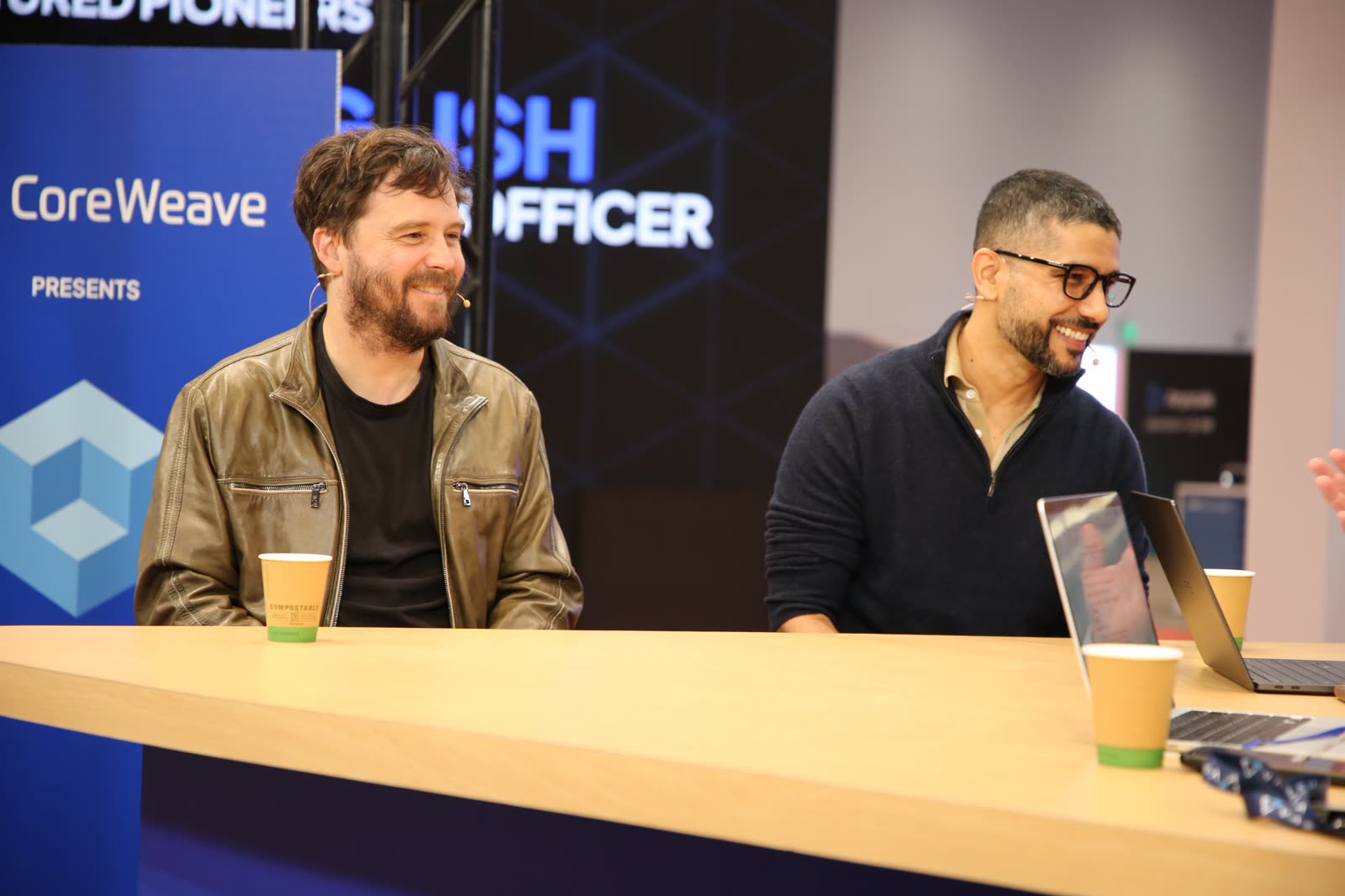
MasterClass is exploring the use of AI teaching agents to make personalized instruction more widely accessible by addressing the limitations of cost and staffing in one-on-one education. During an appearance at the Fully Connected event, Mandar Bapaye, chief product officer at Yanka Industries, d/b/a MasterClass, and Lukas Biewald, senior vice president of AI initiatives at CoreWeave, discussed how these systems are moving from experimental labs into real-world production.
The initiative forms part of a broader trend where companies rely on robust cloud infrastructure, such as CoreWeave’s full-stack AI cloud, to run complex multi-agent setups. According to Bapaye, successful educational AI requires a foundation built on scientific and pedagogical principles rather than simply deploying a basic chatbot.
Adapting to the Learner
The company’s new AI-native business program, MasterClass Executive, employs a multi-agent system designed to tailor lessons according to individual engagement patterns. Bapaye noted that the software monitors indicators like cognitive overload and waning motivation, adjusting its instructional strategy dynamically.
Developing these systems relies heavily on continuous evaluation. Biewald, who has advised the MasterClass team, emphasized the importance of iterative testing cycles. By consistently trying new models and grading rubrics, developers can incrementally improve system performance over time.
Managing Production Complexity
Operating multiple agents for each student creates significant technical overhead. MasterClass typically runs roughly 10 agents behind every user interaction, monitoring all inputs, outputs, tool calls, and inter-agent communications.
To handle production observability, MasterClass selected W&B Weave to trace, monitor, and refine its teaching agents. Bapaye highlighted that monitoring thousands of concurrent users introduces major tracking challenges. To address this, MasterClass built its own agent utilizing Weave’s Model Context Protocol interface. This custom agent reviews system traces nightly, flagging anomalies and identifying potential root causes.
The initial demand for the program has been substantial, with the first cohort attracting 30,000 applications for approximately 500 available slots, and the second cohort approaching 50,000 applicants. Bapaye pointed out that traditional personal tutoring suffers from high expenses, limited teacher supply, and inconsistent quality, areas where AI deployment offers practical solutions.
What it means for developers
For engineers building multi-agent architectures, the MasterClass implementation highlights the gap between initial prototyping and production scale. Observability becomes a primary hurdle when multiple autonomous agents interact simultaneously behind a single user interface. Developers working on similar production deployments must invest in rigorous tracing frameworks, automated log reviews, and iterative model evaluation loops to ensure reliable behavior at scale. Developers looking to experiment with these architectures can try top AI models cheaply through one API at https://apixoai.online.
As organizations move complex AI systems out of controlled test environments, the focus shifts toward structured pedagogical backbones, robust monitoring pipelines, and systematic performance tracking to maintain high standards for end users.
Source: MasterClass bets AI teaching agents can broaden access to tutoring — SiliconANGLE AI. Written by the Apixo team from that report.
One key for Claude, GPT, GLM, DeepSeek and more. Pay per token with crypto.
Get your API key