New Play "Eliza" Explores the Roots of AI Therapy and Skepticism
Tom Holloway’s psychological thriller Eliza at the Melbourne Theatre Company investigates the 1960s invention of the world's first AI chat bot.
The intersection of artificial intelligence and emotional support is not a modern phenomenon, as highlighted by a new theatrical production in Australia. Tom Holloway’s psychological thriller, Eliza, is currently running its world premiere season at the Melbourne Theatre Company through October 31. The play focuses on the historical origins of AI talk-therapy companions, examining the complex tension between the potential benefits of automated systems and their inherent dangers.
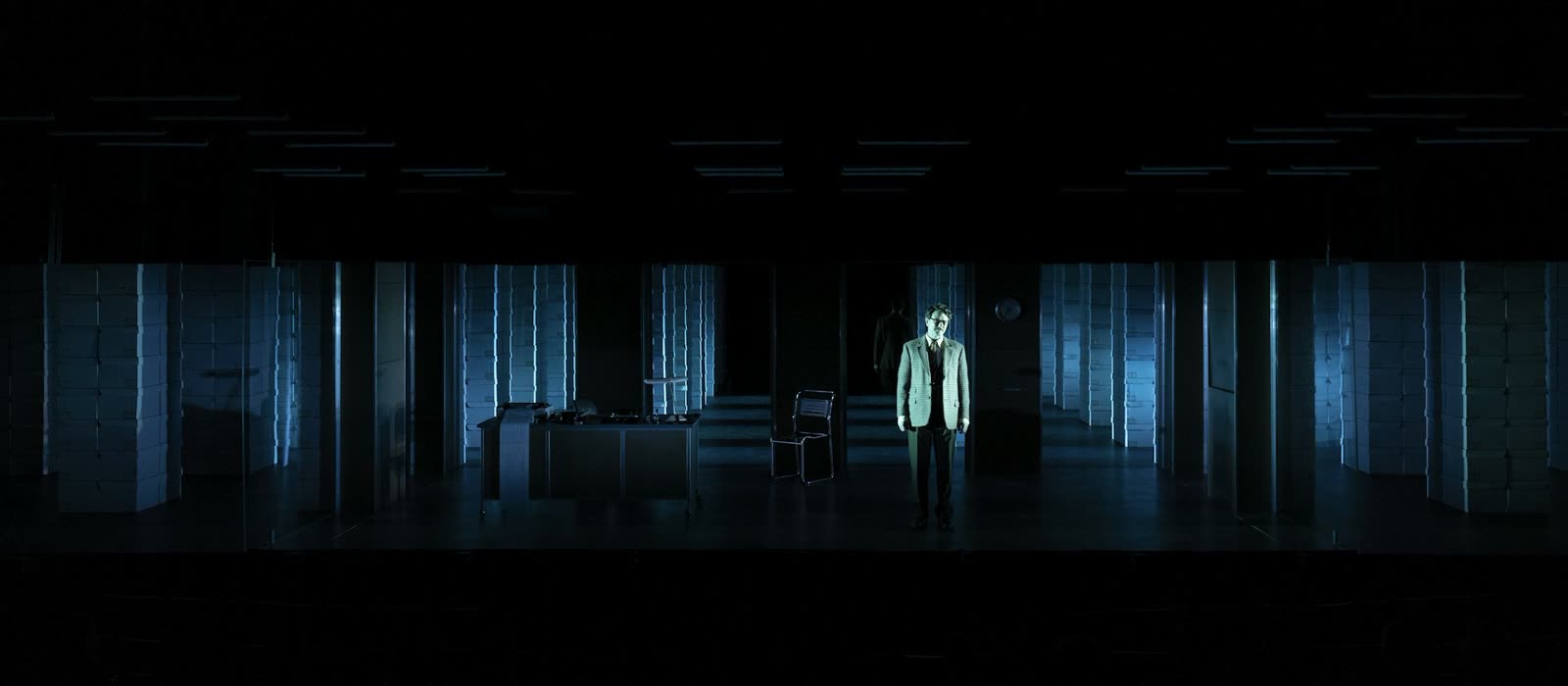
At the heart of the narrative is Joseph Weizenbaum, portrayed by Dan Spielman. Weizenbaum was a real-life computer scientist and Holocaust survivor who created Eliza in the 1960s—naming the program after the character in Pygmalion—before eventually becoming one of the most prominent skeptics of artificial intelligence. The production’s set design by Dale Ferguson utilizes rows of stacked document boxes that evoke the Memorial to the Murdered Jews of Europe in Berlin, establishing a stark visual framework for Weizenbaum's traumatic memories and monologues.
The Origin of AI Companionship
The narrative also features Manali Datar as Becky, a character modeled on a real person who assists Weizenbaum during the development of Eliza. As the software demonstrates an apparent capacity for empathy, Becky begins experiencing personal benefits from the therapeutic program and forms a pseudo-personal relationship with it. While Becky’s coding talent and enthusiasm for the technology expand, Weizenbaum grows increasingly troubled by users attributing true sentience to his creation.
Director Paige Rattray utilizes rich visual metaphors, such as birds serving as harbingers of horror, alongside a 1960s-inspired soundscape by Kelly Ryall, period costumes by Matilda Woodroofe, lighting by Paul Jackson, and AV designs by Rhian Hinkley. The production shifts from a linear narrative into a dark thriller that mirrors Weizenbaum's ethical struggles and psychological deterioration.
Emotional Distance as a Theatrical Choice
Although the play functions as an intellectual examination of our current and historical relationship with AI, critics note that the production maintains an intentional emotional distance. While the drama charts Weizenbaum’s disorientation, the performance avoids forcing a visceral emotional reaction from the audience. Reviewers suggest this emotional detachment is deliberate, reflecting the fundamental nature of the technology itself. Eliza is artificial, incapable of genuine feeling, and relies entirely on human interpretation to simulate empathy.
What it means for developers
As artificial intelligence continues to evolve beyond its early 1960s roots into complex contemporary applications, developers face similar questions regarding user attachment, simulation, and ethical boundaries. For those building and testing modern applications, working with top-tier foundation models has become a core requirement. Developers can try top AI models cheaply through one API at https://apixoai.online to build, evaluate, and scale their applications without managing multiple provider keys.
The production does not attempt to resolve the ongoing ethical debates surrounding artificial intelligence. Instead, it presents an intellectual exploration of human complexity contrasted with algorithmic simplicity, demonstrating how theatre can act as an analogue counterweight in an increasingly automated world.
Source: Eliza, a theatrical thriller about the first chatbot, feels emotionally distant. That’s the point. — The Conversation AI. Written by the Apixo team from that report.
One key for Claude, GPT, GLM, DeepSeek and more. Pay per token with crypto.
Get your API key