Understanding Entra Agent ID's Silent Authorization Failures
Configuring permissions for Microsoft Entra Agent ID requires three steps. Missing the final inheritance step results in a silent HTTP 200 OK with empty roles.

Securing autonomous agents in enterprise environments requires a precise understanding of how identity providers evaluate and delegate permissions. In Microsoft Entra, configuring agent identities introduces a unique hierarchy where an agent does not hold permissions directly. Instead, it inherits them from an agent identity blueprint, which is an application object of the type microsoft.graph.agentIdentityBlueprint. However, setting up this inheritance is a multi-step process that contains a subtle trap: if you miss a step, the authentication flow will still succeed with an HTTP 200 OK status, but the resulting token will carry absolutely no permissions.
The Three-Step Authorization Chain
To successfully pass permissions from a blueprint down to an active agent identity, developers must complete three distinct configuration steps using the Microsoft Graph beta endpoint.
First is the Declaration phase. Developers must patch the blueprint object to declare the required resource access. This is done by sending a PATCH request to /beta/applications/{blueprintObjectId}/microsoft.graph.agentIdentityBlueprint. This step is merely a declaration of intent for the consent process and grants no actual permissions. Notably, this call replaces existing properties rather than merging them, and it requires specific permissions like AgentIdentityBlueprint.ReadWrite.All or direct ownership of the blueprint.
Second is the Grant phase. This involves creating an appRoleAssignment on the blueprint principal via a POST request to /beta/servicePrincipals/{blueprintPrincipalObjectId}/appRoleAssignments. This step assigns the specific roles to the blueprint principal itself, acting as the administrative consent.
The final, and most easily forgotten, step is Inheritance. To allow permissions to flow down to the agent identities, developers must explicitly post to the blueprint's inheritablePermissions endpoint. This is configured per resource application ID. Without this step, the blueprint holds the permissions, but any agent identity created under it remains unauthorized.
The Danger of Silent Success
The critical issue with this architecture is how Entra handles incomplete configurations. In an experiment conducted in September 2026, a test setup was configured with a single agent identity blueprint and one active agent identity. Steps one and two were completed, but the third step—defining the inheritable permissions—was intentionally omitted.
When the agent identity requested a resource token using the standard two-leg exchange, the token endpoint did not throw an error. Instead, it returned an HTTP 200 OK response. The token was successfully issued, properly signed, and featured the correct audience and application ID. However, the roles claim inside the token was completely empty, represented as "roles": [].
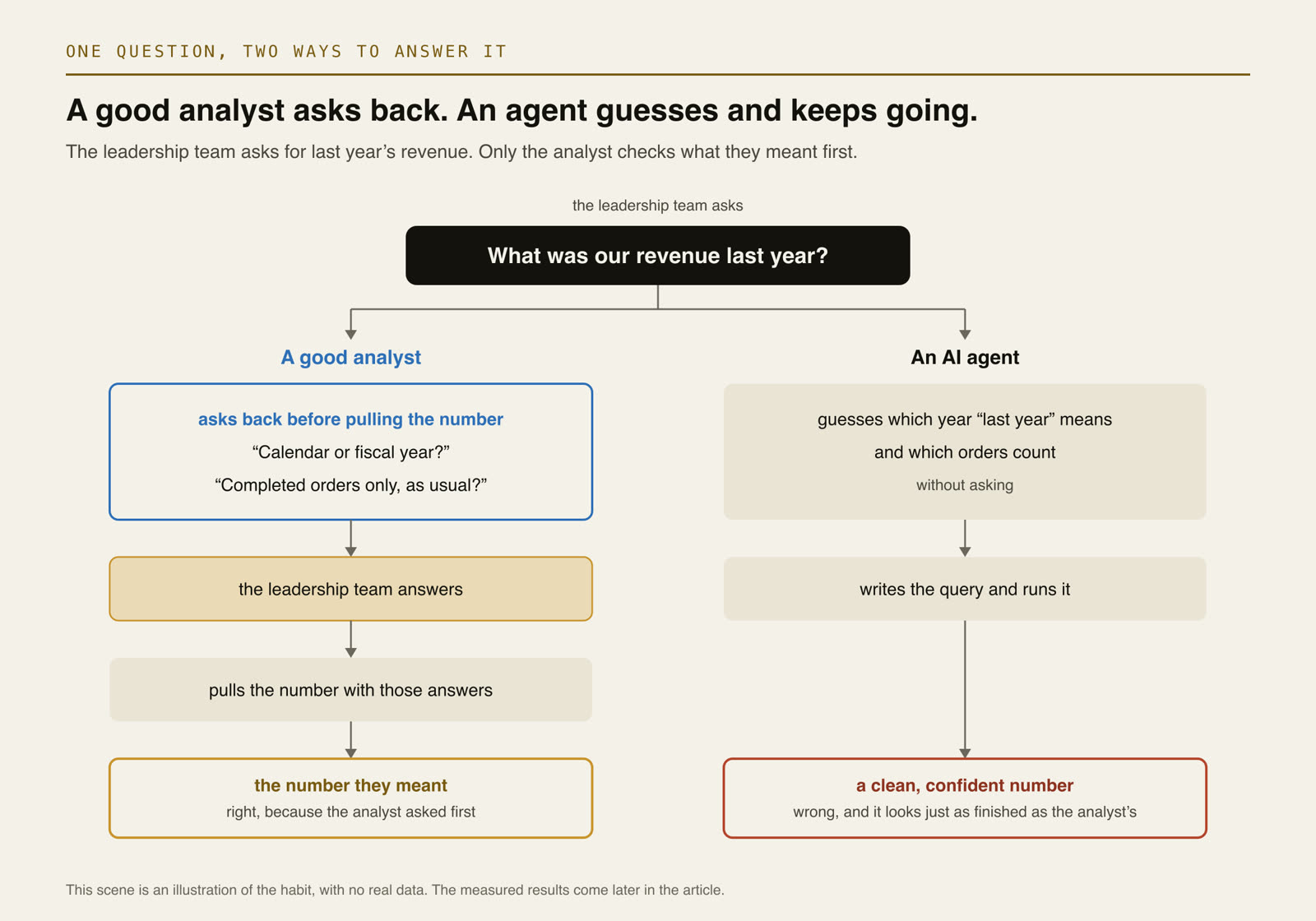
Because Entra successfully authenticated both the blueprint and the agent identity, it viewed the transaction as a valid request. It calculated the agent's permissions, found them to be empty, and issued a valid token reflecting that empty state. For automated provisioning systems that only monitor HTTP status codes, this behavior can easily hide configuration failures.
What it means for developers
For developers building and deploying autonomous agents, this behavior changes how deployment pipelines must be audited. You cannot rely on HTTP success codes to verify that an agent has been provisioned with the correct access rights. Instead, automated deployment scripts must mint a test token and directly inspect the claims inside it to assert that the expected roles are present.
Additionally, the current beta implementation of inheritable permissions offers limited granularity. While the API references an enumerated form for roles, testing shows that only the allAllowed kind is functional. This means developers must either inherit all roles assigned to a blueprint for a specific resource or inherit none. If a new role is granted to a blueprint later, all agents under that blueprint automatically inherit it.
As developers build complex integrations across multiple platforms, testing API behavior and token permissions becomes a critical chore. For those integrating various artificial intelligence capabilities into their workflows, platforms like Apixo (https://apixoai.online) offer cheap, unified API access to top AI models like Claude, GPT, Gemini, and DeepSeek through a single key, simplifying the developer experience. However, when managing identity and access controls within enterprise ecosystems like Microsoft Entra, developers must still pay close attention to the underlying authorization mechanics.
Ultimately, because Entra Agent ID (which reached general availability in April 2026) relies on these beta Graph endpoints for configuration, developers must implement active validation. Relying on static configuration reviews or successful API responses is not enough; only token-level verification can guarantee that your agents are operating with the permissions they need.
Source: Inheritable Permissions in Microsoft Entra Agent ID: Three Required steps, and a 200 OK that… — Towards AI. Written by the Apixo team from that report.
One key for Claude, GPT, GLM, DeepSeek and more. Pay per token with crypto.
Get your API key