Why Fluent AI Translations Still Hide Deceptive Errors and Cultural Blind Spots
AI translation appears polished on the surface, but structural differences between languages, cultural nuance, and shifting terminology continue to introduce hidden errors.
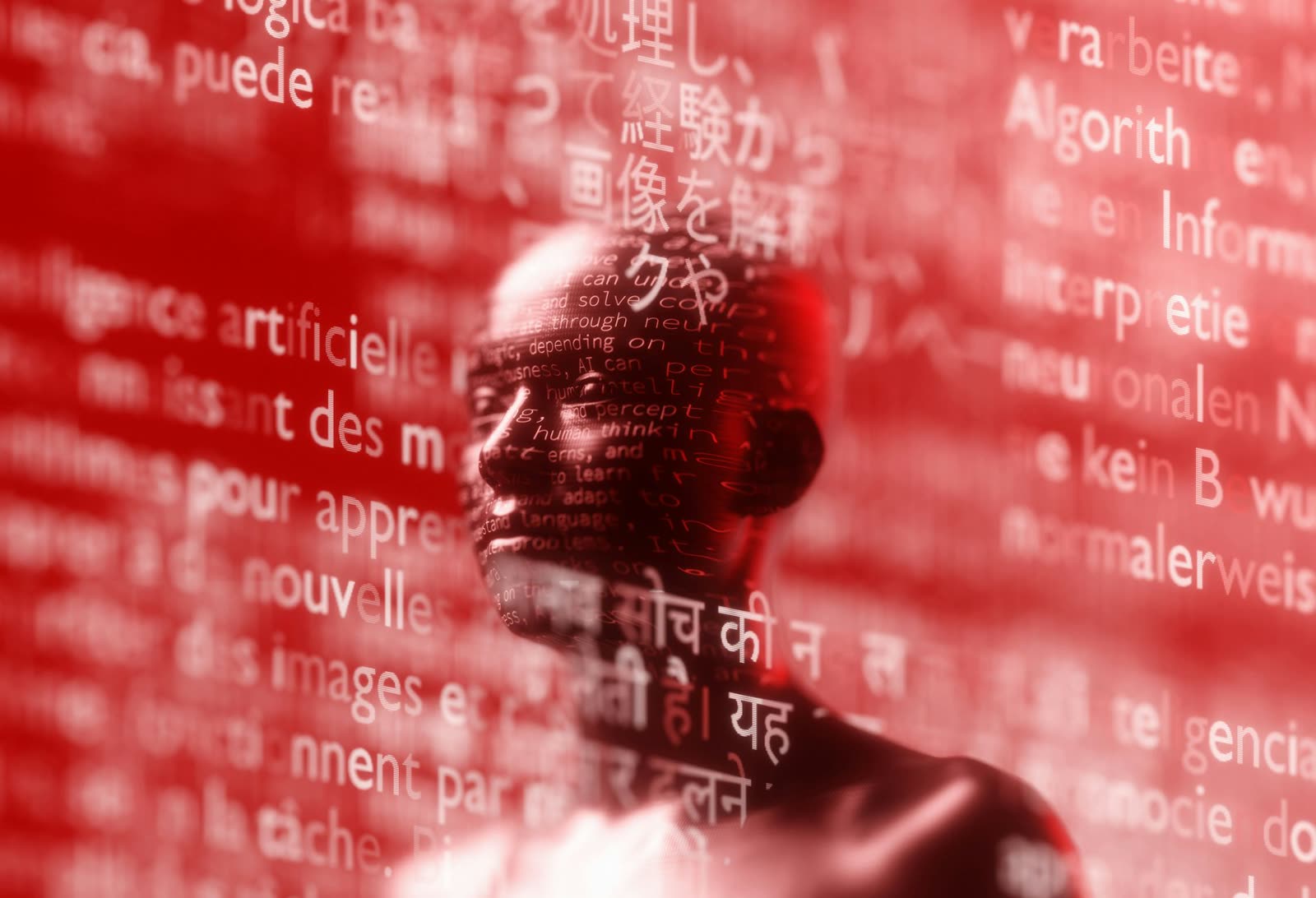
The rapid adoption of generative artificial intelligence has made real-time language translation accessible to almost anyone. With automated systems generating smooth, natural-sounding sentences across dozens of languages, some have even questioned whether human language learning remains necessary. However, surface fluency should not be confused with true accuracy. Even fluent bilingual readers can easily overlook errors buried beneath polished prose.
While some translation mistakes stem from insufficient context, poor prompts, or classic AI hallucinations, others reflect the fundamental friction between human language structures. Even between high-resource language pairs such as English and Chinese—where training corpora are vast—models regularly stumble across word, sentence, and discourse levels.
The Layers Where Machine Translation Falters
At the vocabulary level, polysemy poses a recurring challenge. Because generative models rely on statistical word predictions rather than genuine comprehension, they frequently select incorrect definitions. In one real-world review of an English-to-Chinese translation, an international student described Australian university professors as relaxed because they wore "thongs" to class. Rather than selecting the Australian meaning of flip-flops, the system translated the word as G-string underwear.
Grammatical structures create similar hazards, particularly with tense. In English, verb morphology explicitly marks time through forms like "go," "went," or "is going." Chinese verbs do not inflect for tense, relying instead on contextual markers or surrounding words. When translating into English, automated systems frequently misjudge the timeline, altering whether an action took place in the past, is occurring currently, or is slated for the future.
At the sentence and text levels, ambiguities multiply. A sentence such as "You can see him in the store" can logically indicate either that the subject is inside the store or that the observer is. While human translators parse the broader scene to resolve the ambiguity, AI predicts the next most probable tokens. Furthermore, cross-sentence cohesion differs drastically between tongues. English relies heavily on the definite article "the" to reference earlier elements in a passage. Because Chinese lacks an equivalent article and often achieves cohesion through direct repetition of nouns, models can confuse referents across longer passages, leaving readers disoriented.
Cultural Nuance and Outdated Terminology
Beyond conveying functional facts, language builds social relationships. Tone and register reflect specific cultural expectations. In Australian government publications, for instance, writers frequently use "we" and "you" to foster an approachable relationship with citizens. Conversely, administrative Chinese often favors formal third-person constructions to maintain distance and institutional authority. Unadjusted translations can produce a tone that feels jarring to native speakers.
Language also continuously evolves to describe emerging concepts and remove social stigma. Words like "neurodiversity" may lack standardized equivalents in target languages. Similarly, Chinese terminology surrounding transgender people has shifted toward more inclusive expressions in recent years. Because generative models rely on historic training data, they frequently default to outdated or less appropriate vocabulary. The resulting output may read smoothly from a grammatical standpoint while remaining socially insensitive.
What it means for developers
For software engineers building localization pipelines, customer support bots, or document processors, generative AI translation cannot be treated as a set-and-forget utility. Large language models remain black boxes, and smooth phrasing often disguises serious misinterpretations.
Reliability improves significantly when translations involve widely used languages—such as English, Chinese, Spanish, or French—and source texts with unambiguous syntax. Developers can also improve output quality through targeted prompt engineering that explicitly outlines the target audience, context, formal register, and purpose. In specialized enterprise workflows, combining generative models with dedicated neural machine translation engines generally yields superior consistency compared to general-purpose chatbots alone.
Testing how different architectures handle complex linguistic tasks is essential. Developers evaluating translation quality across platforms like Claude, GPT, and Gemini can access these leading models through a single API key at https://apixoai.online without costly upfront commitments. Ultimately, while AI translation is increasingly capable of handling general gist, mission-critical and culturally sensitive deployments still demand rigorous human oversight.
Source: AI translation sounds convincing, but it can be riddled with hidden errors — The Conversation AI. Written by the Apixo team from that report.
One key for Claude, GPT, GLM, DeepSeek and more. Pay per token with crypto.
Get your API key