Anthropic Introduces Dynamic Workflows for Claude Managed Agents
Anthropic has unveiled dynamic workflows, allowing Claude to autonomously plan, launch, and manage multi-agent topologies for complex, long-running tasks.
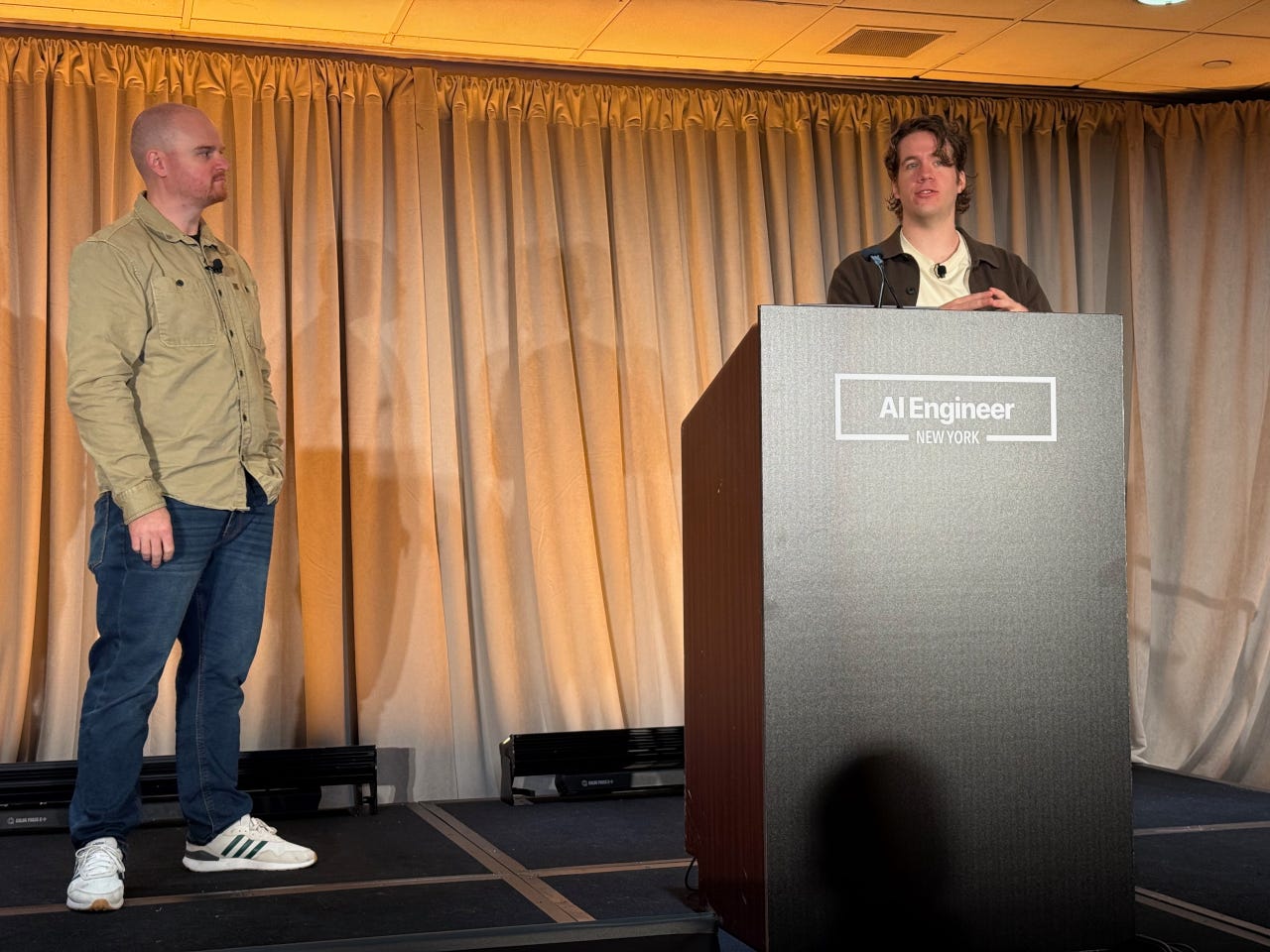
At the AI Engineer New York 2026 conference, Anthropic technical staff members CJ Avilla and Harrison Stall demonstrated a new system for agentic computing: dynamic workflows. Also referred to as "flows," the feature represents a fundamental shift in how Claude Managed Agents operate. Rather than requiring engineers to manually script coordination routines and assemble fixed rosters of sub-agents, dynamic workflows grant Claude the ability to structure and direct its own multi-agent architecture.
Drawing parallels to the evolution of operating systems—from Ken Thompson building early Unix to Linus Torvalds establishing layers of maintainers for Linux—Avilla and Stall explained that complex agent workloads demand similar organizational scaling. As developers increasingly feel overwhelmed managing pipelines and approving endless pull requests from individual bots, flows transfer the structural planning of multi-agent topologies directly to the model.
Autonomous Multi-Agent Topology
Dynamic workflows originated within Claude Code under the concept of "a harness for every task," but they are engineered to sustain much longer execution cycles than single agents. Under this setup, a lead agent first outlines a plan to solve an assigned problem and then writes an orchestration program. This generated program launches discrete sub-agents, routes contextual data, and aggregates outputs.
Prior to this update in the Claude Console, developers using Claude Managed Agents had to explicitly define a central coordinator alongside a predetermined list of sub-agents. With dynamic workflows, Claude decides on the fly how to partition work into verifiable stages. Developers still retain the option to supply pre-configured specialist sub-agents within the configuration if desired.
During a technical demonstration, the presenters walked through a stock watchlist scanner. The system initiated a scanning phase that distributed individual stock tickers to isolated sub-agents, followed by a review phase that gathered the independent findings into a final report. When running, sub-agents communicate not through direct API messaging with one another, but by sharing access to a common filesystem.
Budgets, Visibility, and the Role of "Dreaming"
Operating multiple concurrent agents significantly increases compute usage. Avilla acknowledged that dynamic workflows cost substantially more than running a single agent, even though they prove far more thorough at uncovering granular details.
Addressing audience questions about cost containment, Stall noted that the models are not informed of their remaining dollar balance during a run—partly to avoid making agents "a little bit anxious"—but developers can enforce rigid session budgets via the API. To keep flows from triggering excessive concurrency by default, Anthropic relies on evaluations and conservative baseline parameters, requiring developers to explicitly configure systems when higher parallelization is needed.
For observability, developers can track execution graphs within the Claude Console, inspecting payloads exchanged across every transition. To make recurring flows more efficient over time, Anthropic highlighted an experimental research preview feature called "dreaming." In this process, the model reviews an existing memory store together with session transcripts, deduplicating data, resolving contradictions, and crystallizing new takeaways into a clean memory store for future executions.
What it means for developers
Dynamic workflows reduce the operational overhead of hardcoding multi-agent states. By letting the lead model generate orchestration code dynamically, teams can tackle broader problem spaces without maintaining brittle routing logic between individual worker nodes.
However, this autonomy requires stricter oversight on token consumption and operational safety. Because dynamic workflows intentionally leverage test-time compute to solve harder tasks, managing budgets across experimentation and deployment becomes critical. For developers testing multi-agent patterns across different providers, platforms like Apixo offer cheap pay-per-token API access to Claude, GPT, Gemini, and other top models through a single key, simplifying cost management during architectural prototyping.
Ultimately, Anthropic views dynamic workflows as a foundational step toward putting heavy test-time compute into standard software development workflows. Giving models the latitude to spin up, coordinate, and review their own task forces enables developers to shift their role from micro-managing agent interactions to establishing broad boundary conditions, budgets, and evaluation metrics.
Source: How Anthropic’s Dynamic Workflows Coordinate Claude Agents — Latent Space. Written by the Apixo team from that report.
One key for Claude, GPT, GLM, DeepSeek and more. Pay per token with crypto.
Get your API key