Intel and Broadcom CEOs Warn of Capital Limits and AI Compute Shortages
Semiconductor leaders Lip-Bu Tan and Hock Tan outline major hardware constraints, high training costs, and ROI pressures currently shaping the AI industry.
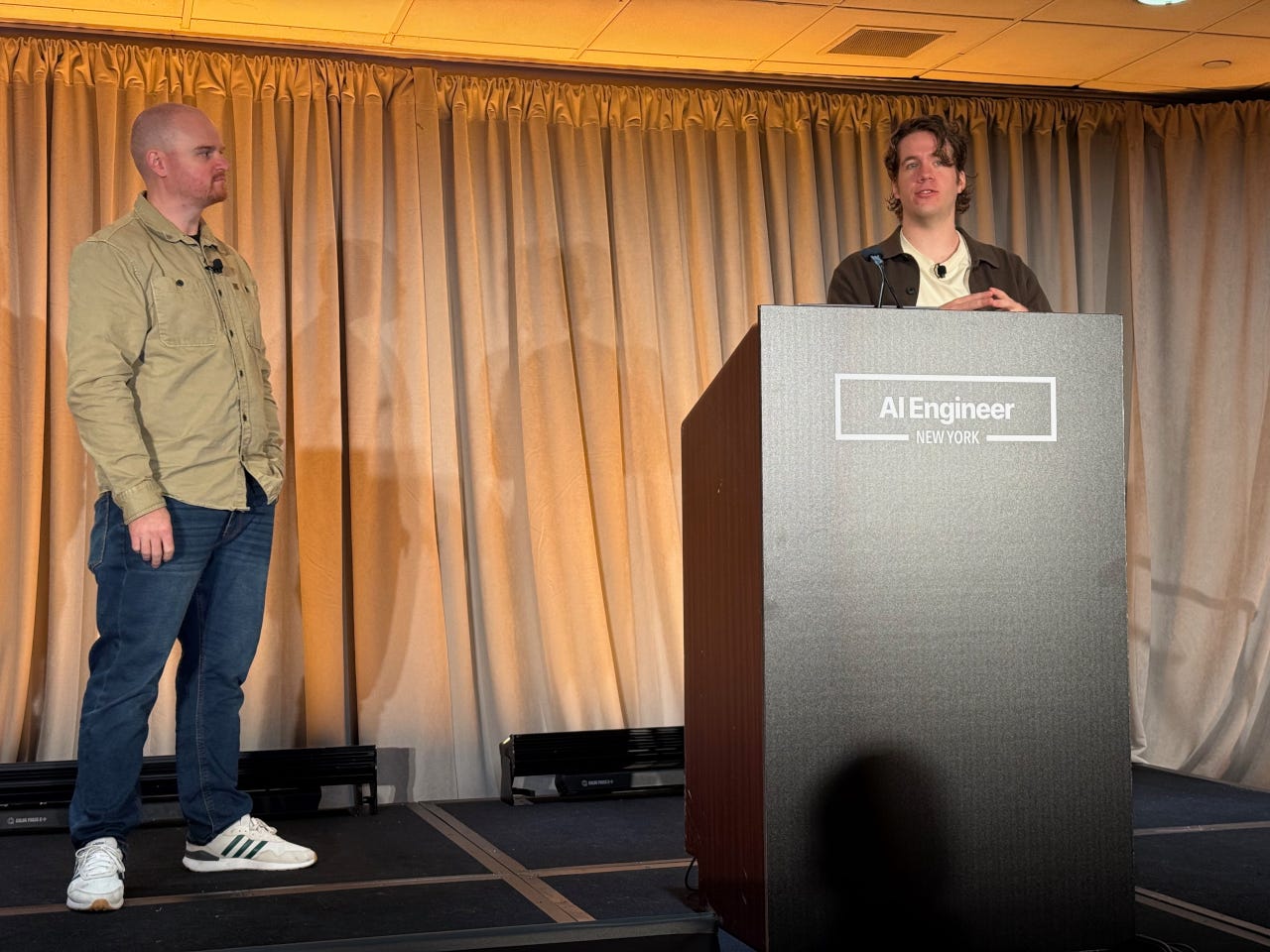
Semiconductor leadership is pointing to capital constraints and return-on-investment pressures as the defining challenges facing the artificial intelligence sector. Speaking at a financial conference in Singapore, Intel Corp. Chief Executive Lip-Bu Tan and Broadcom Inc. Chief Executive Hock Tan warned that while infrastructure demand remains intense, the steep economics of training models and deploying infrastructure will test the industry for years to come.
Both executives lead organizations at the core of AI data center architectures. Intel central processing units are essential for running the tool integrations required by AI agents, yet the company disclosed last month that it has capacity to meet only 50% of incoming orders. Broadcom supplies high-demand network processors and custom AI accelerators, including partnering with OpenAI Group PBC earlier this year to design its first custom inference chip. Hock Tan projected that data center chip shortages could ease by 2028 or 2029, though he cautioned that the imbalance between compute demand and industry supply capacity could persist into 2030.
High Training Costs and the Quest for Real ROI
Beyond hardware supply deficits, both chief executives stressed the economic friction underlying frontier model development. Hock Tan highlighted OpenAI's current financial profile, noting that heavy spending on model training keeps the company operating at a loss despite substantial revenue upside for generative AI. In contrast, financial reports indicate Anthropic PBC has seen gross margins exceed 80% when setting aside training expenditures and partner revenue sharing, positioning it for a second consecutive quarter of positive adjusted operating income.
However, monetizing business usage remains an evolving challenge. Hock Tan observed that a significant share of enterprise revenue at AI labs stems from experimental pilot projects rather than sustained production workloads. He likened these early tests to a child spending arcade tokens quickly without long-term value, urging AI companies to focus on customers that can achieve genuine return on investment from their inference spending. Broadcom's leader also noted that extreme expectations have led some stock market investors to treat AI investments like a casino.
Intel's Lip-Bu Tan agreed that access to capital and its associated cost represent the most pressing hurdle facing the sector, emphasizing that enterprise backers will increasingly demand demonstrable ROI. Tan also observed that open-source models released by Chinese research teams are proving "good enough" for organizations seeking cost-efficient alternatives, calling open-source development the most reliable path to efficiency.
Looking beyond traditional silicon, Lip-Bu Tan predicted that quantum computing could reach mainstream adoption within three to five years. Intel is designing quantum processors using conventional semiconductor manufacturing equipment, having deployed a 12-qubit system at the Argonne National Laboratory in January as part of an effort to scale toward hundreds of qubits.
What it means for developers
For engineering teams building AI applications, the remarks from Intel and Broadcom highlight two immediate realities: persistent compute constraints and increasing scrutiny on inference expenses. With hardware shortages expected to linger through the late 2020s and Intel struggling to satisfy CPU demand for agent workloads, developers cannot rely solely on brute-force cloud capacity expansions.
As enterprise buyers shift away from speculative pilot projects toward measurable business value, software teams must prioritize token efficiency and lower operational costs. Architectural choices will increasingly favor targeted deployments over massive frontier models for routine tasks. To help manage these architectural trade-offs, developers can try top AI models cheaply through one API at https://apixoai.online, making it straightforward to test latency, compare capabilities, and keep operational costs predictable.
Finally, with open-source options expanding and closed-source model providers balancing steep training overheads, developers should design modular application layers. Building workflows that can route simpler tasks to cost-effective or open models while reserving frontier systems for complex logic will be essential as capital discipline becomes the industry standard.
Source: Intel, Broadcom CEOs flag AI industry challenges, trends at financial event — SiliconANGLE AI. Written by the Apixo team from that report.
One key for Claude, GPT, GLM, DeepSeek and more. Pay per token with crypto.
Get your API key