Meta Unveils Muse Wonder and Wonder Full in Push for Frontier AI
Meta's Superintelligence Lab has introduced Muse Wonder and Wonder Full, its first frontier models featuring active memory capabilities to compete with GPT-6 Astra and Fable 5.1.
Meta’s Superintelligence Lab has officially entered the frontier artificial intelligence tier with the launch of Muse Wonder and Muse Wonder Full. The newly unveiled systems mark the company's first direct attempt at a frontier model, moving past its earlier focus on Muse Spark, a lightweight model built primarily for low-latency operations. According to Meta, the larger Wonder family offers enhanced benchmark performance and greater proficiency on demanding tasks such as computer programming.
In its model card disclosures, Meta reported that Wonder and Wonder Full achieved benchmark results comparable to systems like Fable 5.1 and GPT-6 Astra. Describing the milestone in an official announcement, the company stated that the models "mark the next step on our scaling ladder and a major leap toward personal superintelligence."
Focus on active memory and long-term retention
A primary differentiator highlighted by Meta is what the company describes as "active memory"—the model's capacity to retain, track, and synthesize user-provided context across long horizons. The feature is central to Meta’s roadmap for building personal digital assistants that can sustain complex workflows over extended periods.
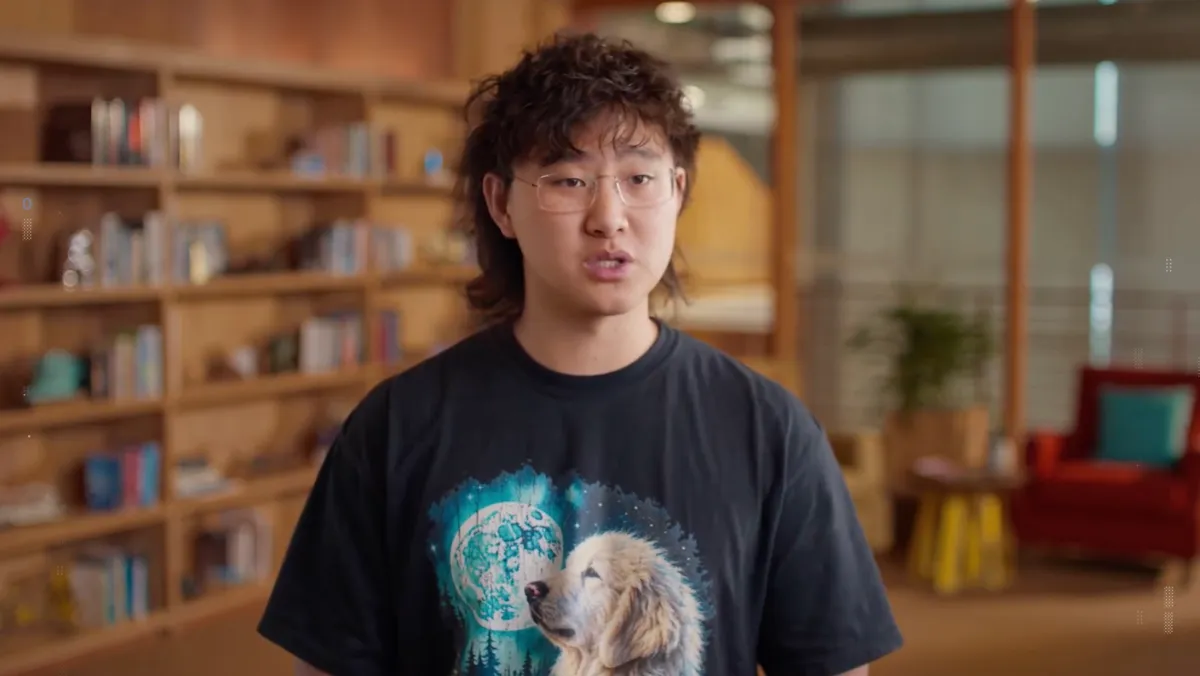
To test this capability, Meta evaluated the model against MemoryBench, a benchmark designed to test continual learning frameworks and memory formation. According to Meta's data, Muse Wonder outperformed Fable, Opus, and Astra on the MemoryBench evaluation. Explaining the initiative in an introductory video, research scientist Kavya Kopparapu stated: “We put a tremendous amount of effort into making sure your model can remember what’s important to you over days, weeks, months and beyond.”
The training run for the Wonder models took place at Meta’s Prometheus data center in central Ohio, a facility that began operations earlier this year. This launch is the first frontier-level release since Scale AI founder Alexandr Wang restructured Meta’s AI division in August of last year. While the reorganized unit had previously rolled out the Muse agent and the lightweight Muse Spark, it had not previously released the larger state-of-the-art models typical of competitors like Anthropic and OpenAI.
API pricing and tiered access
Meta is implementing different distribution channels for the two models. Muse Wonder is available to developers via the Meta Model API at a rate of $4.00 per million input tokens and $20.00 per million output tokens. This rate places it in a similar pricing bracket to models like Opus 5.5 and GPT-6 Sol.
In contrast, Muse Wonder Full will not be accessible through the Meta Model API. Instead, Meta is restricting access to Muse Wonder Full strictly to subscribers of Muse Code. Both models are also designated to run beneath the hood of the Muse agent.
What it means for developers
For engineering teams, the arrival of Muse Wonder introduces a competitive alternative for applications requiring complex reasoning, coding generation, and multi-session contextual memory. The architecture's performance on MemoryBench suggests that applications requiring continuous user state could see improved recall over time.
However, Meta’s release model presents specific constraints. Because Wonder Full is walled off exclusively for Muse Code subscribers, developers seeking direct API integration will be limited to the base Muse Wonder model. Teams must evaluate whether the $4.00 input and $20.00 output token rates align with their infrastructure budgets when compared to other flagship models in the same price tier.
As the landscape of high-performance models expands, developers frequently need to compare token performance, latency, and cost across multiple providers. For engineers exploring their options, platforms like Apixo (https://apixoai.online) allow developers to try top AI models cheaply through one API, offering straightforward access to leading systems under a single pay-per-token integration. With Meta now competing directly at the frontier tier alongside systems like Astra and Opus, developers have an expanded range of architectures to test for complex reasoning and long-term memory tasks.
Source: Meta releases its first frontier model, Muse Wonder — TechCrunch AI. Written by the Apixo team from that report.
One key for Claude, GPT, GLM, DeepSeek and more. Pay per token with crypto.
Get your API key