National Grid Secures Teesside Land for UK's Largest Substation to Power AI
National Grid acquires 73 acres on Teesside for Britain's largest electricity substation, designed to supply up to 3.2GW of power to an adjacent AI data center.
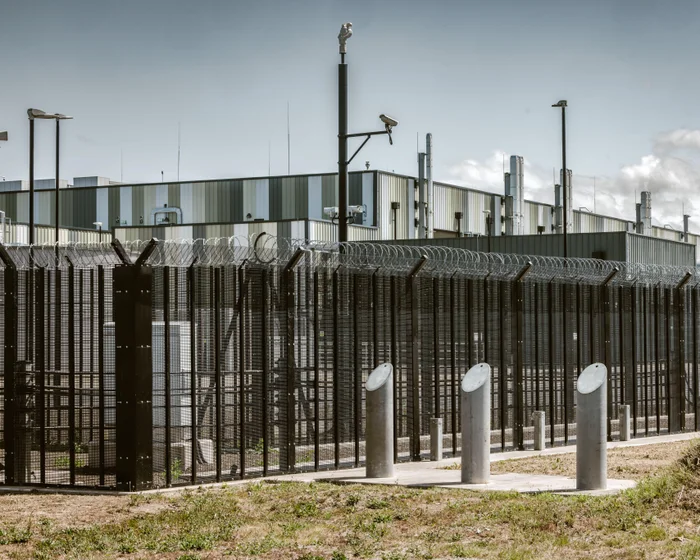
National Grid has finalized an agreement to purchase 73 acres of land at Dorman Point on Teesside, moving forward with plans to construct the largest electricity substation in Britain. Situated on land owned by the public-private partnership Teesworks, the prospective facility is positioned to supply energy to an expansive neighboring artificial intelligence data center as the United Kingdom attempts to scale up its domestic digital infrastructure.
The real estate transaction, initially reported by Sky News, aligns with decisions made last year when the UK government selected Teesworks as the venue for a major AI data center project. Planning submissions for that development span nearly 500,000 square meters. Matt Pearce, the head of land at National Grid, noted that the land deal demonstrates constructive collaboration between the participating parties to secure critical infrastructure. Pearce stated that the installation will support the expansion of AI and digital technologies alongside regional economic growth, adding that the organization is dedicated to moving the project forward as rapidly as possible alongside its partners.
Addressing Grid Constraints to Compete Globally
Power distribution has frequently served as a major impediment to establishing computing facilities in the UK. Ben Houchen, the Tees Valley combined authority mayor, emphasized that securing sufficient electrical capacity on tight timelines has historically slowed local progress while competitors abroad gained market share. Houchen pointed out that international hubs in the United States, the Gulf, and portions of Europe have captured substantial investment while British projects waited in queues.
With a projected capacity reaching up to 3.2 gigawatts (GW), the Teesside development is intended to place the region in direct contention for high-scale computing investments. Houchen remarked that if the UK intends to cultivate sovereign AI capacity and maintain sensitive data within its own borders, adequate physical facilities are essential. He highlighted that keeping such infrastructure on Teesside is preferable to seeing it located in Texas or Abu Dhabi.
Engineering and delivery for the substation are also taking shape. Infrastructure services firm Balfour Beatty is reportedly positioned to build the Teesworks substation on behalf of National Grid, with Steel River Power (SRP) playing a substantial role in the initiative.
National Policy and Local Friction
The project arrives amidst broader government interventions aimed at treating computing infrastructure as foundational public utility. The UK government recently published a draft national policy statement regarding data centers, categorizing these facilities as being as crucial to the modern economy as traditional railways and electricity grids. According to the document, policymakers want to exert greater control over future data center deployment while making certain that host regions and the wider country derive tangible benefits.
Despite official backing, expanding compute sites across the UK has encountered community pushback. Local opposition groups have contested data center initiatives in diverse regions, ranging from the Scottish village of Auchtertool, located north of Edinburgh, to Brick Lane in east London. Furthermore, AI sector representatives warned government ministers in October that they had approximately 12 months to resolve public friction, cautioning that failure to do so could result in contentious protests akin to those observed in the United States.
What it means for developers
For software engineers and technology teams working with artificial intelligence, the expansion of high-capacity data centers like Teesside holds practical long-term significance. A primary objective behind the 3.2GW hub is supporting local infrastructure capable of hosting sensitive data domestically. Developers working in regulated sectors—such as finance, healthcare, or government technology—often face stringent data residency constraints that make hosting workloads within the UK preferable or legally mandated.
Additionally, securing vast power allocations addresses the underlying compute bottleneck that governs the training and deployment of large-scale systems. While physical infrastructure projects of this scale take significant time to construct, software teams can already integrate state-of-the-art models into their applications. Developers can try top AI models cheaply through one API at https://apixoai.online, tapping into systems like Claude, GPT, Gemini, and DeepSeek while the physical infrastructure continues to develop.
Over the longer horizon, the UK’s commitment to building out major grid links like Dorman Point indicates that developers can anticipate greater local cloud capacity and lower latency for UK-based endpoints, provided that developers and policymakers can navigate the community challenges currently facing new builds.
Source: National Grid to site biggest substation on Teesside, near planned AI datacentre — The Guardian AI. Written by the Apixo team from that report.
One key for Claude, GPT, GLM, DeepSeek and more. Pay per token with crypto.
Get your API key