OpenAI Releases Over 700 Math Proofs at Once, Triggering Turmoil Among Researchers
OpenAI published hundreds of claimed solutions to open math problems on GitHub, sparking deep anxiety, debates over readability, and warnings about digital security from top researchers.
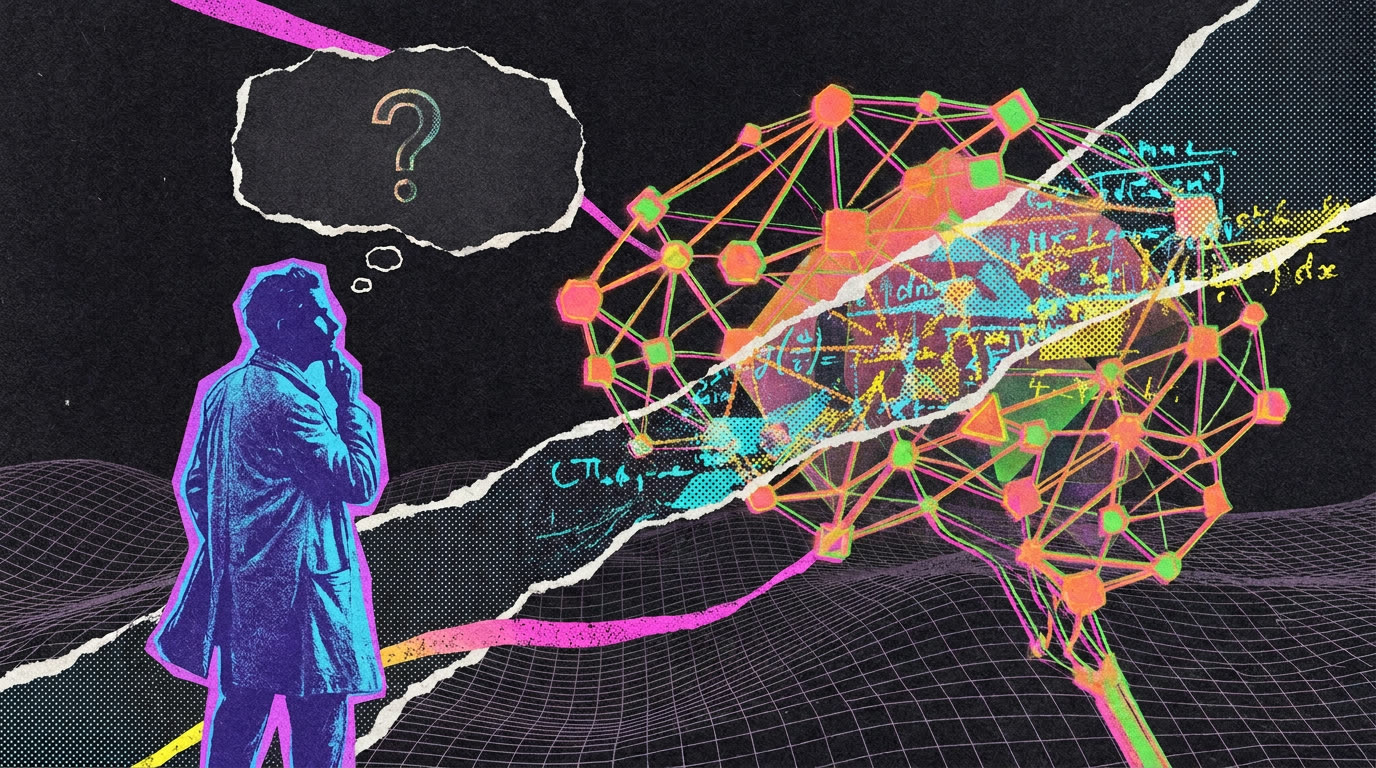
On October 6, 2026, OpenAI published more than 700 manuscripts in a single upload to GitHub, asserting solutions to hundreds of unsolved mathematical conjectures. The unprecedented release quickly prompted widespread debate across the academic world, with the mathematics blog Proofs and Prompts gathering over 100 reactions from researchers worldwide. While some papers have already been retracted and others face criticism for poor clarity, prominent mathematicians acknowledge that the models have demonstrated remarkable problem-solving capabilities.
Several high-profile figures noted the sheer scale of the output. Alvaro Lozano-Robledo described the release date as "possibly the single most important day in the history of mathematics thus far," though he highlighted that OpenAI had established a weaker variant known as "quasi-RH" rather than proving the Riemann Hypothesis itself. Other researchers saw years of planned work eclipsed overnight. Ben Green reported that the publications appeared to resolve around 75 percent of the research milestones funded by a prestigious European grant he had secured just months earlier in June. Hugo Duminil-Copin, a 2022 Fields Medalist, stated that the company claimed findings on every major open problem he had publicly discussed during his career, leaving him feeling paralyzed by the speed and scale of the announcement.
Shock, Disruption, and Concerns Over Research Quality
Many researchers expressed frustration not with the existence of automated reasoning, but with the manner in which the findings were presented. Enrico Fatighenti argued that the mathematical community was effectively tasked with interpreting poorly structured submissions, noting that AI systems could generate immense volumes of unrefined material while claiming intellectual credit. PhD candidate Tristan Humbert, whose dissertation topic was among those OpenAI claimed to have resolved, described the uploaded paper as "mostly unreadable slop," throwing his postdoctoral applications into disarray.
Other mathematicians mourned the loss of the collaborative, incremental process that defines academic discovery. Matt Zaremsky likened his research group's four years of steady progress to an archaeological excavation that was suddenly blasted apart by a trillion-dollar company dropping the assembled skeleton on the table. Ian Agol drew a comparison to Grigori Perelman's 2002 proof, where mathematicians spent years parsing condensed arguments, while Henry Wilton criticized OpenAI for omitting contributor names and failure rates, arguing it treated mathematics as detached from human endeavor.
Not all responses were purely negative. Danny Calegari noted his personal research remained unaffected and pointed to a creative project where Anthropic's Claude wrote code for a mathematical animation soundtrack. Constantin Kogler, who had been working on an overlapping problem using Astra, published his own paper on arXiv the following day, describing the environment as a rich landscape for new concepts.
Cryptographic Warnings and the "Math 2.0" Shift
Beyond academic careers, the sudden leap in reasoning capability prompted security warnings. Fields Medalist Peter Scholze emphasized that mathematics remains a long-term pursuit of human understanding, but he cautioned that the underlying mechanisms could pose risks to digital security. Scholze noted that uncovering methods to break common encryption algorithms did not seem to significantly surpass the current capabilities of these systems, warning of severe consequences for digital infrastructure.
Terence Tao expressed conflicted views, acknowledging that the proofs introduced innovative concepts that would prove valuable once analyzed, while lamenting the absence of human collaborators to present and teach the material. The release arrived amid existing friction: the Association for Human Mathematics had previously called for an OpenAI boycott over scientific research norms, and 25 Fields Medalists, including Tao and Scholze, had issued a joint statement highlighting the misalignment between tech industry objectives and academic mathematical inquiry. Tao previously outlined a transition toward a "Math 2.0" era where simply solving problems ceases to be the sole objective of the discipline.
What it means for developers
OpenAI's massive release illustrates a fundamental pivot in how frontier AI labs evaluate reasoning systems. As researcher Johannes Schmitt observed, the company appeared to use open mathematical conjectures not purely to advance the field, but because existing reasoning benchmarks were no longer challenging enough for leading models. For developers, this shift signals that automated reasoning, formal verification, and deep logical inference are advancing from experimental demonstrations into complex problem domains.
As AI providers continue pushing frontiers in algorithmic logic and code synthesis, developers can try top AI models cheaply through one API at https://apixoai.online to evaluate different reasoning engines across their own software pipelines. Whether building automated code-auditing tools, symbolic math engines, or analytical workflows, engineering teams will increasingly need to navigate both the raw problem-solving speed of frontier models and the practical challenge of verifying and interpreting their outputs.
Source: "How much beauty have we lost?" Mathematicians react with shock and disgust as OpenAI bulldozes their field — The Decoder. Written by the Apixo team from that report.
One key for Claude, GPT, GLM, DeepSeek and more. Pay per token with crypto.
Get your API key